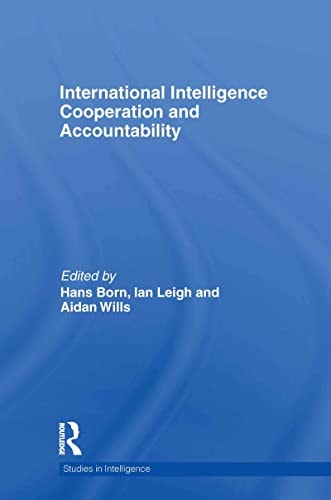
International intelligence cooperation and accountability
0
0
As an Amazon Associate and affiliate partner, Menrva Books earns from qualifying purchases. Learn more
Author Description
This Book Examines How International Intelligence Cooperation Has Come To Prominence Post-9/11 And Introduces The Main Accountability, Legal And Human Rights Challenges That It Poses. Since The End Of The Cold War, The Threats That Intelligence Services Are Tasked With Confronting Have Become Increasingly Transnational In Nature – Organised Crime, The Proliferation Of Weapons Of Mass Destruction And Terrorism. The Growth Of These Threats Has Impelled Intelligence Services To Cooperate With Contemporaries In Other States To Meet These Challenges. While Cooperation Between Certain Western States In Some Areas Of Intelligence Operations (such As Signals Intelligence) Is Longstanding, Since 9/11 There Has Been An Exponential Increase In Both Their Scope And Scale. This Edited Volume Explores Not Only The Challenges To Accountability Presented By International Intelligence Cooperation But Also Possible Solutions For Strengthening Accountability For Activities That Are Likely To Remain Fundamental To The Work Of Intelligence Services. The Book Will Be Of Much Interest To Students Of Intelligence Studies, Security Studies, International Law, Global Governance And Ir In General.
Menrva's Summary
THE THESIS
This volume investigates the complex intersection of transnational intelligence cooperation and the resulting challenges to legal and democratic accountability in the post-9/11 era. Edited by H. Born, the text draws upon contributions from experts in security and international law to analyze how the shift toward globalized intelligence operations complicates traditional oversight mechanisms. The book argues that while cooperation is necessary to address transnational threats like terrorism and weapons proliferation, it creates significant gaps in human rights protections and state accountability. It provides a framework for understanding these tensions and proposes potential solutions for strengthening oversight in a globalized security environment.
THE SCOPE MAP
What You Will Find
- Analysis of the post-9/11 expansion in the scope and scale of international intelligence sharing.
- Examination of legal and human rights challenges inherent in transnational intelligence operations.
- Discussion of accountability mechanisms for intelligence services operating across borders.
- Case studies and theoretical frameworks relevant to intelligence studies, security studies, and global governance.
THE AUTHORITY PERSPECTIVE
Experts identify this volume as a foundational text for understanding the governance of modern intelligence networks. Readers frequently note the academic density of the prose, making it a primary resource for students and practitioners in international law and security studies.
Page Count:
335
Publication Date:
2011-01-01
Publisher:
Routledge
ISBN-10:
020383173X
ISBN-13:
9780203831731
True Crime
Science
International Law
Human rights
Security Studies
International Cooperation
Government accountability
International relations
Community Tags
Similar Books