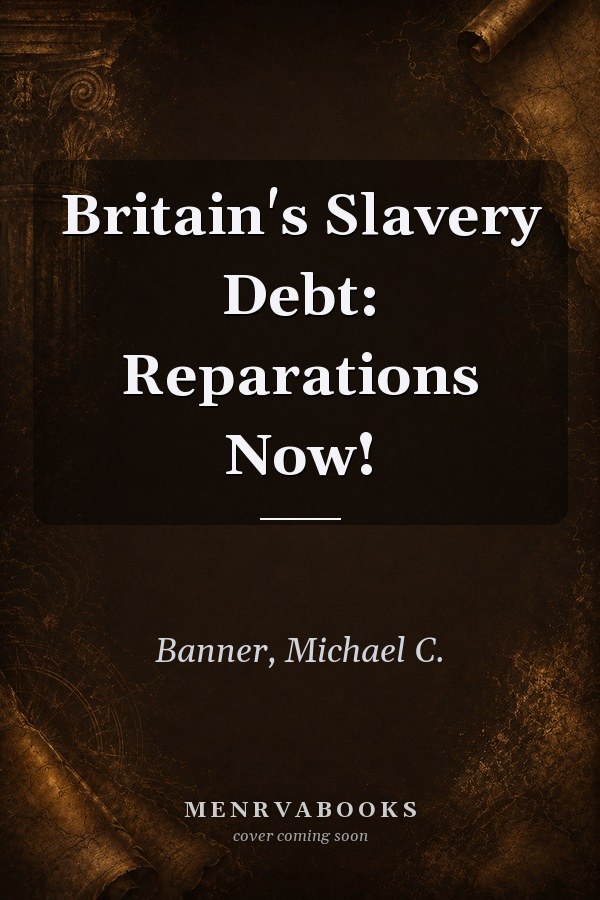
Britain's Slavery Debt: Reparations Now!
0
0
As an Amazon Associate and affiliate partner, Menrva Books earns from qualifying purchases. Learn more
Author Description
Cover -- Britain's Slavery Debt: Reparations Now! -- Copyright -- Dedication -- Foreword -- Acknowledgements -- Contents -- Epi -- 1: Introduction: A Proposal -- 2: Britain And The Caribbean: A Brief (and Painful) History -- Britain And The Caribbean: A Story In Three Acts -- Act I: Slavery And Sugar -- Act Ii: Abolition: (aka The Continuation Of Servitude) -- Act Iii: Colonial Neglect And Independence -- Conclusion: Three Acts/one Story -- 3: When History Is Not Just History: The Demands Of Moral Repair -- What Is Moral Repair? -- When History Is Not Done With 4: Eleven (mostly Not Very Good) Objections To Reparations -- Introduction -- 'it's A Long Time Ago-time To Move On' -- 'everyone Thought Slavery Was Morally Acceptable Back Then. Standards Change, But There Is No Reason For Us To Apologise Or Seek To Make Amends In Our Day For What Was Thought Unexceptional At The Time. This Is To Judge The Past From The Present' -- 'slavery Was Legal Back Then, So There Can Be No Question Of Making Amends For It Now' -- 'africans Sold Africans-why Should We Take The Blame?' -- 'we Weren't The Worst' -- 'what About The Vikings-or The Barbary Pirates?' 'rather Than Banging On About Reparations We Should Be Celebrating Britain's Leading Role In The Abolition Of The Slave Trade And Slavery' -- 'reparations Are Objectionable In Principle-at Least In Cases Of Very Grave Wrong-since They Are Not And Cannot Be Commensurable With The Wrong Which Has Been Done' -- 'intergenerational Reparations Amount To Visiting The Sins Of The Fathers On The Sons ' 'okay-maybe Some Money Is Owed By Way Of Reparations. But Demands For Reparations Ofteninclude A Demand For An Apology-and Since We Are Not Responsible For The Sins, We Can't Be Sorry And We Can't Apologise' -- 'reparations For Slavery Are Backward Looking, Encourage Claimants To Identify As Victims, And Risk Reinforcing The Very Racial Divisions Which Are At The Root Of Past Injustices' -- 5: From Principle To Practice: Who Should Pay W
Menrva's Summary
THE THESIS
This book investigates the moral and practical arguments for British reparations regarding the historical legacy of the transatlantic slave trade. Michael C. Banner, a theologian and academic, utilizes historical analysis and ethical frameworks to argue that the contemporary British state holds a responsibility to address the enduring economic and social consequences of slavery in the Caribbean. The text systematically dismantles common counter-arguments to reparations, proposing that moral repair is a necessary component of historical justice.
THE SCOPE MAP
What You Will Find
- A three-act historical overview of Britain's involvement in the Caribbean slave trade and colonial aftermath.
- A philosophical framework defining the concept of moral repair in a post-colonial context.
- A point-by-point rebuttal of eleven common objections to the reparations movement.
Scope Limits
- The text focuses primarily on the British context and does not provide a comprehensive global analysis of all slave-holding nations.
- It does not offer a detailed financial ledger or specific legislative roadmap for the implementation of payments.
THE AUTHORITY PERSPECTIVE
Scholars and readers note that the book provides a structured, accessible entry point into the ethics of reparations for a general audience. Experts highlight the author's ability to translate complex theological and philosophical concepts into a clear, argumentative format for contemporary political discourse.
Page Count:
0
Publication Date:
1900-01-01
Publisher:
Oxford University Press,
ISBN-10:
0191995452
ISBN-13:
9780191995453
True Crime
History
Ethics
Slavery
Black people
Reparations for historical injustices
Social Welfare
Human rights
Colonies
Social justice
British History
Community Tags
Similar Books