Author Description
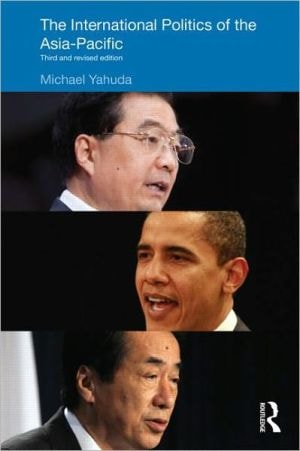
Section I: The Cold War, 1945-1989. Part I: The International Politics Of The Asia-pacific. The Impact Of The Cold War And The Struggles For Independence, 1945-54; The Application Of Bipolarity, 1954-70; The Period Of Tripolarity, 1971-89 -- Part Ii. The Policies Of The Great Powers. The United States And The Asia-pacific; The Soviet Union/russia And The Asia-pacific; China And The Asia-pacific; Japan And The Asia-pacific -- Section Ii: The Post Cold War Period. Part Ii: The Era Of American Pre-eminence. From Unipolarity To Multipolarity, 1991-2010; The United States: From The End Of The Cold War To The War On Terrorism And Beyond; China: China's Ascent To Global Economic Power And Political Influence; Japan: Coping With Reletive Decline. Michael Yahuda. Includes Bibliographical References And Index.
Menrva's Summary
THE THESIS
This book investigates the shifting dynamics of international power and regional stability in the Asia-Pacific region from the end of World War II to the early 21st century. Michael Yahuda, a recognized scholar in Asian politics, utilizes a historical framework to analyze how global bipolarity, the end of the Cold War, and the subsequent rise of regional powers have shaped the geopolitical landscape. The text argues that the region's political evolution is defined by the interplay between great power competition and the internal development of individual nations.
THE SCOPE MAP
What You Will Find
- A chronological analysis of the Cold War era, including the impact of bipolarity and tripolarity on regional independence movements.
- Detailed examinations of the foreign policies of the United States, the Soviet Union/Russia, China, and Japan.
- An assessment of the transition from American unipolarity to a more complex, multipolar regional environment.
- Analysis of China's economic ascent and Japan's strategic adjustments in the post-Cold War period.
THE AUTHORITY PERSPECTIVE
Experts frequently cite this work as a foundational text for understanding the historical trajectory of Asia-Pacific international relations. Readers often note the academic density of the prose, which provides a comprehensive overview suitable for students and researchers of regional security.
Page Count:
384
Publication Date:
2011-01-01
Publisher:
Taylor & Francis Group
ISBN-10:
0203830989
ISBN-13:
9780203830987
History
Southeast Asia
International relations
Cold War
East Asia
Community Tags
Similar Books