In the Shadow of International Law
0
0
As an Amazon Associate and affiliate partner, Menrva Books earns from qualifying purchases. Learn more
Author Description
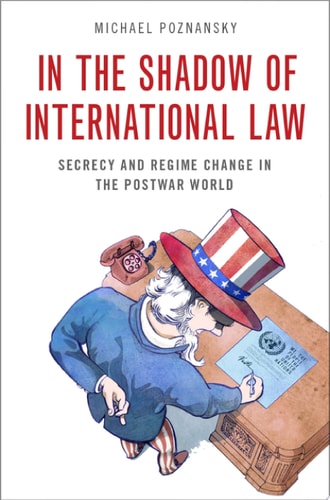
This Book Investigates One Of The Most Controversial Forms Of Secret Statecraft In International Politics: The Use Of Covert Action To Overthrow Foreign Regimes. The Central Question It Asks Is Why Leaders Sometimes Turn To The So-called Quiet Option When Conducting Regime Change Rather Than Using Overt Means. Whereas Existing Works Prioritize The Desire To Control Escalation Or Avoid Domestic-political Constraints To Explain This Variation, This Book Highlights The Surprising Role That International Law Plays In These Decisions. When States Cannot Locate A Legal Exemption From The Nonintervention Principle- The Prohibition On Unwanted Violations Of Another State's Sovereignty, Codified In The United Nations Charter And Elsewhere-they Are More Likely To Opt For Covert Action. Concealing Brazen Violations Of Nonintervention Helps States Evade Hypocrisy Costs And Avoid Damaging Their Credibility. These Claims Are Tested Against Four Regime Change Operations Carried Out By The United States In Latin America During The Cold War Using Declassified Government Documents, Interviews With Former Government Officials, And Historical Accounts. The Theory And Findings Presented In This Book Expose The Secret Underpinnings Of The Liberal International Order And Speak To Longstanding Debates About The Conduct Of Foreign-imposed Regime Change As Well As The Impact Of International Law On State Behavior. This Book Also Has Important Policy Implications, Including What Might Follow If America Abandons Its Role As The Steward Of The Postwar Order As Well As The Promise And Peril Of Promoting New Rules And Norms In Cyberspace-- Provided By Publisher.
Menrva's Summary
THE THESIS
This book investigates the strategic rationale behind why state leaders utilize covert action to overthrow foreign regimes instead of overt military intervention. Michael Poznansky, a scholar of international relations, argues that international law acts as a significant constraint on state behavior. He posits that when states cannot find a legal justification for violating the nonintervention principle, they resort to covert operations to avoid the hypocrisy costs and reputational damage associated with public violations of international norms.
THE SCOPE MAP
What You Will Find
- A theoretical framework linking international law to the choice between covert and overt regime change.
- Analysis of four specific regime change operations conducted by the United States in Latin America during the Cold War.
- Methodology incorporating declassified government documents, historical records, and interviews with former officials.
Scope Limits
- The analysis focuses primarily on Cold War-era U.S. operations and does not provide an exhaustive survey of all global covert actions.
- The study does not cover non-state actor involvement or private sector influence in regime change operations.
THE AUTHORITY PERSPECTIVE
Experts identify this work as a rigorous contribution to the study of international security and the practical application of international law. Readers frequently note the academic density of the prose, which is well-suited for scholars and policy analysts interested in the intersection of statecraft and legal norms.
Page Count:
0
Publication Date:
2020-01-01
Publisher:
New York : Oxford University Press,
ISBN-10:
0190096624
ISBN-13:
9780190096625
History
Sovereignty Violation Of
Cold War
Subversive Activities
International Law
Espionage
International relations
Foreign Policy
Regime Change
Community Tags
Similar Books