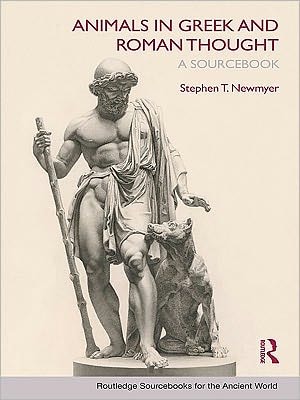
Animals in Greek and Roman Thought: A Sourcebook
0
0
As an Amazon Associate and affiliate partner, Menrva Books earns from qualifying purchases. Learn more
Author Description
Although reasoned discourse on human-animal relations is often considered a late twentieth-century phenomenon, ethical debate over animals and how humans should treat them can be traced back to the philosophers and literati of the classical world. From Stoic assertions that humans owe nothing to animals that are intellectually foreign to them, to Plutarch's impassioned arguments for animals as sentient and rational beings, it is clear that modern debate owes much to Greco-Roman thought.Animals in Greek and Roman Thought brings together new translations of classical passages which contributed to ancient debate on the nature of animals and their relationship to human beings. The selections chosen come primarily from philosophical and natural historical works, as well as religious, poetic and biographical works. The questions discussed include: Do animals differ from humans intellectually? Were animals created for the use of humankind? Should animals be used for food, sport, or sacrifice? Can animals be our friends?The selections are arranged thematically and, within themes, chronologically. A commentary precedes each excerpt, transliterations of Greek and Latin technical terms are provided, and each entry includes bibliographic suggestions for further reading.
Menrva's Summary
THE THESIS
This sourcebook investigates the historical origins of ethical discourse regarding human-animal relations within the intellectual traditions of the Greco-Roman world. Stephen T. Newmyer, a scholar of classical literature and philosophy, compiles and translates primary source material to demonstrate that modern debates concerning animal sentience and human obligation are deeply rooted in ancient thought. By organizing these texts thematically, the author provides a framework for understanding how classical philosophers, poets, and natural historians navigated the moral status of non-human beings.
THE SCOPE MAP
What You Will Find
- A curated collection of translated primary source excerpts from Greek and Roman philosophical, religious, and poetic texts.
- Thematic organization covering topics such as animal intelligence, the utility of animals, and the ethics of sacrifice and diet.
- Editorial commentary providing historical context and linguistic clarification for each translated passage.
- Bibliographic guidance for further academic research into classical perspectives on animal nature.
THE AUTHORITY PERSPECTIVE
Scholars and students of classical studies frequently cite this volume as a foundational resource for examining the intersection of ancient philosophy and animal ethics. The text is noted for its accessibility, as it provides necessary linguistic support and contextual framing for readers who may not be specialists in Greek or Latin.
Page Count:
160
Publication Date:
2011-01-01
Publisher:
Routledge
ISBN-10:
0203839153
ISBN-13:
9780203839157
History
Philosophy
Ethics
Animal Studies