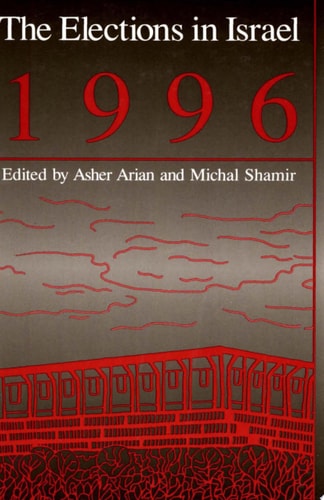
The Elections in Israel 1996
0
0
As an Amazon Associate and affiliate partner, Menrva Books earns from qualifying purchases. Learn more
Author Description
Leading American and Israeli social scientists discuss the precedent-setting events of Israel's 1996 elections. Leading social scientists from Israeli and American universities, using different methods and representing diverse intellectual traditions, address the precedent-setting events of Israel's 1996 elections. The contributors discuss the meaning of collective identity, the role of religion and nationalism in modern Israel, the political behavior of Israeli Arabs, the secrets of success of the immigrant party. Also discussed are issues such as the impact of the direct election law on party organization, primaries and coalition-formation calculations, the repeated electoral failure of Shimon Peres, and the role of the media in the election campaign. The 1996 elections in Israel represented a "first" in Israeli politics in many ways. For the first time Israelis directly elected their prime minister and, in simultaneous but separate elections, they elected their 120-member Knesset (parliament). Also, it was the first time that elections were held after the mutual recognition of Israel and the Palestine Liberation Organization following the Oslo accords and it was the first election held after the assassination of Prime Minister Yitzhak Rubin. The political parties made widespread use of primaries in 1996, and hundreds of thousands of new immigrants from the former Soviet Union cast their first ballots. The large support for a party supported by former-Soviet immigrants highlighted the emergence of sectarian interests. This was also expressed in the surge for the two Arab parties from five seats in 1992 to nine seats in 1996, and for the three Jewish religious parties whose combined representation grew from 16 to 23 seats.
Menrva's Summary
THE THESIS
This book investigates the multifaceted political and social dynamics that shaped Israel's pivotal 1996 elections, a period marked by significant electoral reforms and geopolitical shifts. Authored by leading American and Israeli social scientists, the work analyzes the impact of direct prime ministerial elections, the role of the Oslo Accords, and the aftermath of Yitzhak Rabin's assassination on the political landscape. It examines the influence of new immigrant demographics, the rise of sectarian interests, and the media's role in shaping public opinion during this unprecedented electoral cycle.
THE SCOPE MAP
- Analysis of the direct election law for prime minister and Knesset.
- Discussion on the role of religion and nationalism in modern Israeli identity.
- Examination of the political behavior and representation of Israeli Arabs.
- Insights into the success factors of the immigrant party.
- Exploration of the impact of primaries on party organization and coalition calculations.
- Case studies on the electoral strategies and outcomes for key political figures like Shimon Peres.
- An assessment of the media's influence on the election campaign.
THE AUTHORITY PERSPECTIVE
The collection of essays by prominent social scientists offers a comprehensive examination of Israel's 1996 elections, a watershed moment in its political history. The contributors' diverse methodologies and intellectual backgrounds provide a rich, multi-angled perspective on the electoral reforms and societal forces at play. The book is recognized for its in-depth analysis of issues such as collective identity, the influence of religious and nationalist sentiments, and the political engagement of various demographic groups, including Arab citizens and recent immigrants. It serves as a valuable resource for understanding the complexities of Israeli politics during a transformative period.
Page Count:
318
Publication Date:
2012-02-01
Publisher:
State University of New York Press
ISBN-10:
0791495221
ISBN-13:
9780791495223
Politics
History
Non-Fiction
Social Science
Community Tags
Similar Books