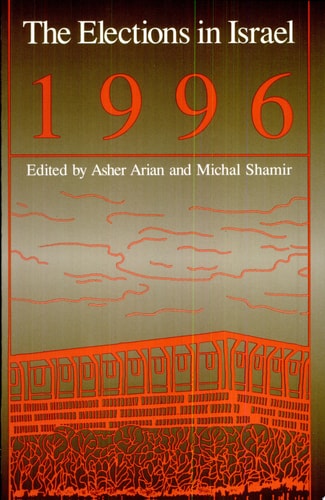
The Elections in Israel 1996
0
0
As an Amazon Associate and affiliate partner, Menrva Books earns from qualifying purchases. Learn more
Author Description
Leading social scientists from Israeli and American universities, using different methods and representing diverse intellectual traditions, address the precedent-setting events of Israel's 1996 elections. The contributors discuss the meaning of collective identity, the role of religion and nationalism in modern Israel, the political behavior of Israeli Arabs, the secrets of success of the immigrant party. Also discussed are issues such as the impact of the direct election law on party organization, primaries and coalition-formation calculations, the repeated electoral failure of Shimon Peres, and the role of the media in the election campaign. The 1996 elections in Israel represented a "first" in Israeli politics in many ways. For the first time Israelis directly elected their prime minister and, in simultaneous but separate elections, they elected their 120-member Knesset (parliament). Also, it was first time that elections were held after the mutual recognition of Israel and the Palestine Liberation Organization following the Oslo accords and it was the first election held after the assassination of Prime Minister Yitzhak Rubin.
Menrva's Summary
THE THESIS
The 1996 Israeli elections marked a pivotal moment in the nation's political history, introducing direct prime ministerial elections and occurring amidst significant geopolitical shifts. This volume brings together leading social scientists to analyze the multifaceted implications of these precedent-setting events. The contributors explore the complex interplay of collective identity, religion, and nationalism, alongside the political engagement of Israeli Arabs and the electoral strategies of emerging parties. Key issues examined include the impact of electoral law reforms on party organization and coalition dynamics, the persistent electoral challenges faced by Shimon Peres, and the pervasive influence of media in shaping public opinion during the campaign.
THE SCOPE MAP
- Analysis of the meaning of collective identity in modern Israel.
- Exploration of the role of religion and nationalism in Israeli politics.
- Examination of the political behavior and participation of Israeli Arabs.
- Discussion of the factors contributing to the success of the immigrant party.
- Impact of the direct election law on party organization and primaries.
- Analysis of coalition-formation calculations and strategies.
- In-depth look at the repeated electoral failures of Shimon Peres.
- The role and influence of the media in the election campaign.
THE AUTHORITY PERSPECTIVE
This collection is regarded as a comprehensive academic examination of a critical juncture in Israeli political history. The diverse perspectives offered by Israeli and American scholars provide a robust analysis of the unique circumstances surrounding the 1996 elections. The book is noted for its detailed exploration of identity politics, electoral mechanics, and the broader geopolitical context, making it a valuable resource for understanding contemporary Israeli political dynamics. The collected essays offer deep insights into the forces shaping the nation's leadership and parliamentary representation.
Page Count:
318
Publication Date:
1999-07-01
Publisher:
SUNY Press
ISBN-10:
0791442381
ISBN-13:
9780791442388
Politics
Non-Fiction
History
Community Tags
Similar Books














