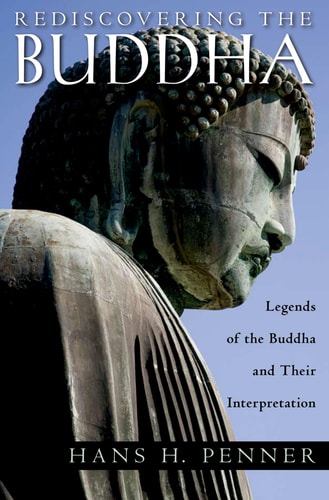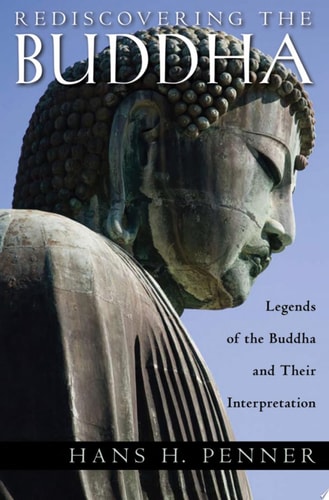
Rediscovering the Buddha: The Legends and Their Interpretations
0
0
As an Amazon Associate and affiliate partner, Menrva Books earns from qualifying purchases. Learn more
Author Description
Hans Penner takes a new look at the classic stories of the life of the Buddha. In the first part of the book, he presents a full account of these stories, drawn from various texts of Theravada Buddhism, the Buddhism of South and Southeast Asia. Penner allots one chapter to each of the major milestones in Buddha's life, with titles such as: Birth and Early Life, Flight from the Palace, Enlightenment and Liberation, Last Watch and Funeral. In the process, he brings to the fore dimensions of the myth that have been largely ignored by western scholarship. In Part II, Penner offers his own original interpretations of the legends. He takes issue with Max Weber's assertion that "Buddhism is an other-worldly ascetic religion," a point of view that remains dominant in the received tradition and in most contemporary studies of Buddhism. His central thesis is that the "householder" is a necessary element in Buddhism and that the giving of gifts, which creates merit and presupposes the doctrine of karma, mediates the relation between the householder and the monk. Penner argues that the omission of the householder - in his view one-half of what constitutes Buddhism as a religion - is fatal for any understanding of Buddha's life or of the Buddhist tradition. This boldly revisionist and deeply learned work will be of interest to a wide range of scholarly and lay readers.
Menrva's Summary
THE THESIS
Hans H. Penner investigates whether the traditional scholarly focus on asceticism in Buddhism has obscured the essential role of the householder in the religion's structure. Drawing on his background in religious studies, Penner re-examines Theravada texts to argue that the relationship between the monk and the householder, mediated by the act of gift-giving and the doctrine of karma, is fundamental to the Buddhist tradition. He challenges the long-standing assertion that Buddhism is exclusively an other-worldly ascetic religion.
THE SCOPE MAP
What You Will Find
- A comprehensive account of the Buddha's life milestones drawn from Theravada texts.
- A critical analysis of Max Weber's interpretations of Buddhist asceticism.
- A theoretical framework emphasizing the interdependence of the monastic and lay communities.
Scope Limits
- The analysis is primarily restricted to Theravada Buddhist texts and traditions.
- The book does not provide an exhaustive history of Mahayana or Vajrayana developments.
THE AUTHORITY PERSPECTIVE
Scholars and students of religion frequently note the book's revisionist approach to established academic perspectives on Buddhist practice. Experts highlight this as a significant contribution to the study of the social and economic dimensions of Buddhist religious life.
Page Count:
273
Publication Date:
2009-01-01
Publisher:
Oxford University Press
ISBN-10:
0190452609
ISBN-13:
9780190452605
History
Religion
Philosophy
Mythology
Buddhism
Theology
Community Tags
Similar Books