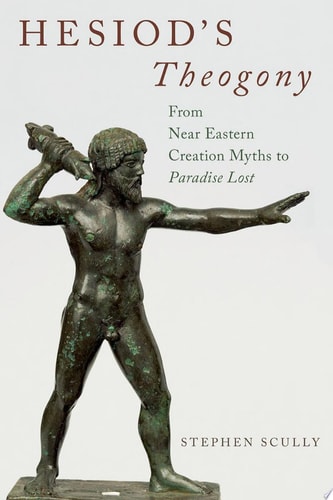
Hesiod's Theogony
0
0
As an Amazon Associate and affiliate partner, Menrva Books earns from qualifying purchases. Learn more
Author Description
Stephen Scully Both Offers A Reading Of Hesiod's Theogony And Traces The Reception And Shadows Of This Authoritative Greek Creation Story In Greek And Roman Texts Up To Milton's Own Creation Myth, Which Sought To Soar Above Th' Aonian Mount [i.e., The Theogony]...and Justify The Ways Of God To Men. Scully Also Considers The Poem In Light Of Near Eastern Creation Stories, Including The Enûma Elish And Genesis, As Well As The Most Striking Of Modern Scientific Myths, Freud's Civilization And Its Discontents. Scully Reads Hesiod's Poem As A Hymn To Zeus And A City-state Creation Myth, Arguing That Olympus Is Portrayed As An Idealized Polity And--with But One Exception--a Place Of Communal Harmony. This Reading Informs His Study Of The Theogony's Reception In Later Writings About Polity, Discord, And Justice. The Rich And Various Story Of Reception Pays Particular Attention To The Long Homeric Hymns, Solon, The Presocratics, Pindar, Aeschylus, Aristophanes, And Plato In The Archaic And Classical Periods; To The Alexandrian Scholars, Callimachus, Euhemerus, And The Stoics In The Hellenistic Period; To Ovid, Apollodorus, Lucian, A Few Church Fathers, And The Neoplatonists In The Roman Period. Tracing The Poem's Reception In The Byzantine, Medieval, And Early Renaissance, Including Petrarch And Erasmus, The Book Ends With A Lengthy Exploration Of Milton's Imitations Of The Poem In Paradise Lost. Scully Also Compares What He Considers Hesiod's Artful Interplay Of Narrative, Genealogical Lists, And Keen Use Of Personified Abstractions In The Theogony To Homeric Narrative Techniques And Treatment Of Epic Verse.
Menrva's Summary
THE THESIS
This work investigates how Hesiod's Theogony functions as an authoritative creation myth and how its narrative structure and political themes have been interpreted and adapted across Western literature. Stephen Scully, a scholar of classical literature, utilizes a comparative framework to analyze the poem's internal mechanics alongside its reception in Greek, Roman, and later European texts. He argues that the poem serves as a hymn to Zeus and an idealized model of a city-state, providing a foundation for subsequent discussions on justice, discord, and governance.
THE SCOPE MAP
What You Will Find
- Comparative analysis of the Theogony against Near Eastern myths like Enûma Elish and Genesis.
- Examination of the poem's reception from the Archaic period through the Renaissance, including Milton's Paradise Lost.
- Analysis of Hesiod's literary techniques, specifically his use of genealogical lists and personified abstractions.
Scope Limits
- The study does not provide a line-by-line philological commentary on the original Greek text.
- It focuses primarily on the poem's reception in Western literary and political thought rather than its archaeological or historical context.
THE AUTHORITY PERSPECTIVE
Scholars and students of classical reception frequently cite this work for its comprehensive tracking of Hesiodic influence across centuries of literature. Readers often note the academic density of the prose, which is intended for those with a background in classical studies or literary history.
Page Count:
400
Publication Date:
2015-01-01
Publisher:
Oxford University Press
ISBN-10:
0190253975
ISBN-13:
9780190253974
History
Philosophy
Literary Criticism
Mythology
Community Tags
Other Editions(2)
Similar Books