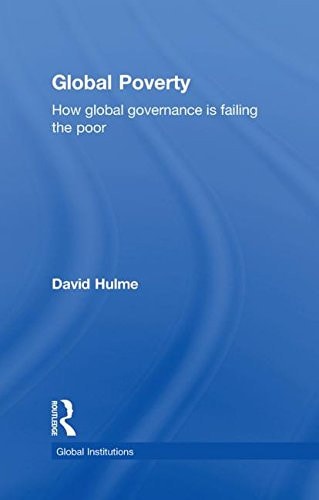
Global Poverty: How Global Governance Is Failing the Poor
0
0
As an Amazon Associate and affiliate partner, Menrva Books earns from qualifying purchases. Learn more
Author Description
Around 1.4 Billion People Presently Live In Extreme Poverty, And Yet Despite This Vast Scale, The Issue Of Global Poverty Had A Relatively Low International Profile Until The End Of The 20th Century. In This Important New Work, The Author Charts The Rise Of Global Poverty As A Priority Global Issue, And Its Subsequent Marginalization As Old Themes Edged It Aside (trade Policy And Peace-making In Regions Of Geo-political Importance) And New Issues Were Added (terrorism, Global Climate Change And Access To Natural Resources). Providing A Concise And Detailed Overview Of Both The History And The Current Debates That Surround This Key Issue, The Book: Outlines How The Notion Of Global Poverty Eradication Has Evolved, Evaluates The Institutional Landscape And Its Ability To Attack Global Poverty, Explores The Roles Of Major Institutions, And Discusses The Emerging Issues That Are Re-shaping Thinking, And The Future Prospects For Global Poverty Eradication.
Menrva's Summary
THE THESIS
This work investigates why global governance mechanisms have consistently failed to effectively address the persistent crisis of extreme poverty affecting over a billion people. David Hulme, a professor of development studies, utilizes historical analysis and institutional critique to examine the shifting priorities of international organizations. He argues that global poverty eradication has been frequently sidelined by competing geopolitical interests, trade agendas, and emerging security concerns, resulting in a fragmented and often ineffective policy landscape.
THE SCOPE MAP
What You Will Find
- A historical overview of how global poverty rose to prominence as an international policy priority at the end of the 20th century.
- An evaluation of the institutional landscape, including the roles of major international organizations in poverty reduction efforts.
- Analysis of the strategic choices and political obstacles that hinder effective poverty eradication.
- Examination of emerging global issues, such as climate change and resource access, and their impact on future poverty reduction strategies.
THE AUTHORITY PERSPECTIVE
Experts and academics recognize this text as a comprehensive overview of the political economy surrounding international development. Readers frequently note the clarity with which the author connects institutional history to the current failures of global governance.
Page Count:
246
Publication Date:
2010-01-01
Publisher:
Routledge
ISBN-10:
0203844769
ISBN-13:
9780203844762
Economics
International relations
Poverty
Sociology
Community Tags
Similar Books