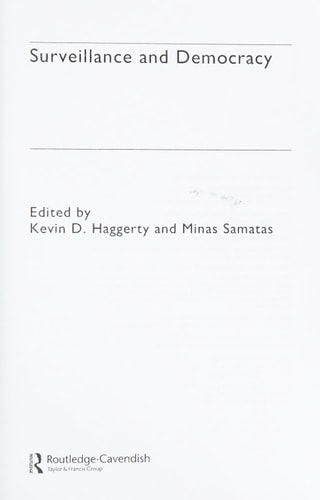
Surveillance and Democracy
0
0
As an Amazon Associate and affiliate partner, Menrva Books earns from qualifying purchases. Learn more
Author Description
This collection represents the first sustained attempt to grapple with the complex and often paradoxical relationships between surveillance and democracy. Is surveillance a barrier to democratic processes, or might it be a necessary component of democracy? How has the legacy of post 9/11 surveillance developments shaped democratic processes? As surveillance measures are increasingly justified in terms of national security, is there the prospect that a shadow security state will emerge? How might new surveillance measures alter the conceptions of citizens and citizenship which are at the heart of democracy? How might new communication and surveillance systems extend (or limit) the prospects for meaningful public activism?Surveillance has become central to human organizational and epistemological endeavours and is a cornerstone of governmental practices in assorted institutional realms. This social transformation towards expanded, intensified and integrated surveillance has produced many consequences. It has also given rise to an increased anxiety about the implications of surveillance for democratic processes; thus raising a series of questions – about what surveillance means, and might mean, for civil liberties, political processes, public discourse, state coercion and public consent – that the leading surveillance scholars gathered here address.
Menrva's Summary
THE THESIS
This collection investigates whether the expansion of surveillance systems acts as a fundamental barrier to democratic processes or serves as a necessary component of modern governance. Kevin D. Haggerty and a group of leading scholars examine the tension between national security imperatives and the preservation of civil liberties. By analyzing post-9/11 developments, the contributors provide a framework for understanding how integrated surveillance technologies alter the relationship between the state and its citizens.
THE SCOPE MAP
What You Will Find
- Analysis of the impact of surveillance on civil liberties and public discourse
- Examination of the emergence of a shadow security state in the post-9/11 era
- Theoretical exploration of how surveillance systems redefine the concepts of citizenship and public consent
- Discussion on the role of communication systems in facilitating or hindering public activism
THE AUTHORITY PERSPECTIVE
Experts recognize this collection as a foundational text for understanding the intersection of surveillance studies and political theory. Readers frequently note the academic density of the prose and the rigorous interdisciplinary approach taken by the contributors.
Page Count:
272
Publication Date:
2010-01-01
Publisher:
Routledge
ISBN-10:
020385215X
ISBN-13:
9780203852156
Science
Social Control
Sociology
Technology
Democracy
Social Aspects