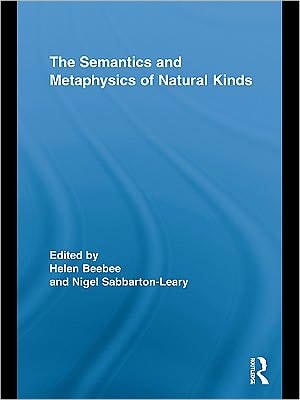
Semantics and Metaphysics of Natural Kinds
0
0
As an Amazon Associate and affiliate partner, Menrva Books earns from qualifying purchases. Learn more
Author Description
Essentialism--roughly, the view that natural kinds have discrete essences, generating truths that are necessary but knowable only a posteriori--is an increasingly popular view in the metaphysics of science. At the same time, philosophers of language have been subjecting Kripke’s views about the existence and scope of the necessary a posteriori to rigorous analysis and criticism. Essentialists typically appeal to Kripkean semantics to motivate their radical extension of the realm of the necessary a posteriori; but they rarely attempt to provide any semantic arguments for this extension, or engage with the critical work being done by philosophers of language. This collection brings authors on both sides together in one volume, thus helping the reader to see the connections between views in philosophy of language on the one hand and the metaphysics of science on the other. The result is a book that will have a significant impact on the debate about essentialism, encouraging essentialists to engage with debates about the semantic presuppositions that underpin their position, and, encouraging philosophers of language to engage with the metaphysical presuppositions enshrined in Kripkean semantics.
Menrva's Summary
THE THESIS
This volume investigates the intersection between essentialist metaphysics and Kripkean semantics to determine if the necessary a posteriori is philosophically sustainable. The editors, Helen Beebee and Nigel Sabbarton-Leary, curate a collection of essays that bridge the gap between the metaphysics of science and the philosophy of language. By challenging essentialists to defend their semantic presuppositions and urging linguists to examine metaphysical foundations, the text provides a rigorous framework for evaluating the nature of natural kinds.
THE SCOPE MAP
What You Will Find
- Analysis of Kripkean semantics regarding the necessary a posteriori
- Critical evaluation of essentialist claims in the philosophy of science
- Comparative studies between linguistic theory and metaphysical doctrine
- Scholarly discourse on the existence and scope of natural kinds
THE AUTHORITY PERSPECTIVE
Experts identify this collection as a vital resource for scholars navigating the divide between analytic philosophy of language and contemporary metaphysics. Readers frequently note the high level of academic density, making it a specialized text intended for advanced students and professional philosophers.
Page Count:
241
Publication Date:
2010-01-01
Publisher:
Taylor & Francis Group
ISBN-10:
0203852338
ISBN-13:
9780203852330
Science
Philosophy
Epistemology
Categories Philosophy
Metaphysics
Community Tags
Similar Books