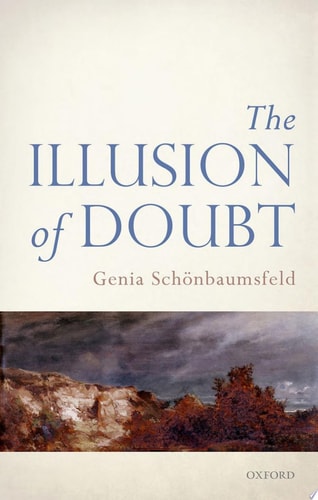
The Illusion of Doubt
0
0
As an Amazon Associate and affiliate partner, Menrva Books earns from qualifying purchases. Learn more
Author Description
The Illusion Of Doubt Shows That Radical Scepticism Is An Illusion Generated By A Cartesian Picture Of Our Evidential Situation - The View That My Epistemic Grounds In Both The 'good' And The 'bad' Cases Must Be The Same, And Consists In Information About An Inner Mental Realm Of Experience From Which I Must Try To Work My Way Out To What Goes On 'out There' In The External World. It Is This Picture Which Issues Both A Standing Invitation To Radical Scepticism And Ensures That There Is No Way Of Getting Out Of It While Agreeing To The Sceptic's Terms. What We Therefore Need To Do Is Not Try To Answer The Sceptical Problem 'directly', But Rather To Undermine The Assumptions That It Depends On. These Are Among The Most Ingrained In Contemporary Epistemology. They Include The Notion That Radical Scepticism Can Be Motivated By The 'closure' Principle For Knowledge, That The 'indistinguishability Argument' Renders The Cartesian Conception Compulsory, That The 'new Evil Genius Thesis' Is Coherent, And The Demand For A 'global Validation' Of Our Epistemic Practices Makes Sense. Once These Dogmas Are Undermined, The Path Is Clear For A 'realism Without Empiricism' That Allows Us To Re-establish Unmediated Contact With The Objects And Persons In Our Environment Which An Illusion Of Doubt Had Threatened To Put Forever Beyond Our Cognitive Grasp.
Menrva's Summary
THE THESIS
This book investigates whether radical skepticism is a conceptual illusion stemming from flawed Cartesian assumptions about human knowledge and perception. Genia Schönbaumsfeld, a scholar in epistemology, challenges the traditional view that our epistemic grounds are limited to an internal mental realm. She argues that by dismantling the foundational dogmas of contemporary epistemology, we can move past the skeptical trap and restore a direct, realistic connection to the external world.
THE SCOPE MAP
What You Will Find
- A critique of the Cartesian picture of the evidential situation
- Analysis of the 'closure' principle for knowledge
- Deconstruction of the 'indistinguishability argument' and the 'new evil genius thesis'
- A proposal for a 'realism without empiricism' framework
Scope Limits
- The text does not provide a direct refutation of skepticism on its own terms
- It does not cover historical developments of skepticism outside of the Cartesian tradition
THE AUTHORITY PERSPECTIVE
Experts recognize this work as a significant contribution to contemporary debates regarding the nature of knowledge and the limits of skeptical inquiry. Readers frequently note the academic density of the prose, which requires a strong background in analytic philosophy to fully engage with the author's arguments.
Page Count:
176
Publication Date:
2016-01-01
Publisher:
Oxford University Press, Incorporated
ISBN-10:
019108655X
ISBN-13:
9780191086557
Philosophy
Metaphysics
Epistemology
Skepticism
Academic
Community Tags
Other Editions(3)

Similar Books