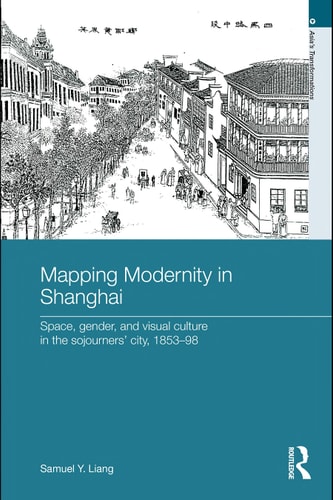
Mapping modernity in Shanghai: space, gender, and visual culture in the sojourners' city, 1853-98
0
0
As an Amazon Associate and affiliate partner, Menrva Books earns from qualifying purchases. Learn more
Author Description
This Book Argues That Modernity First Arrived In Late Nineteenth-century Shanghai Via A New Spatial Configuration. This City’s Colonial Capitalist Development Ruptured The Traditional Configuration Of Self-contained Households, Towns, And Natural Landscapes In A Continuous Spread, Producing A New Set Of Fragmented As Well As Fluid Spaces. In This Process, Chinese Sojourners Actively Appropriated New Concepts And Technology Rather Than Passively Responding To Western Influences. Liang Maps The Spatial And Material Existence Of These Transient People And Reconstructs A Cultural Geography That Spreads From The Interior To The Neighbourhood And Public Spaces. In This Book The Author: Discusses The Courtesan House As A Surrogate Home And Analyzes Its Business, Gender, And Material Configurations; Examines A New Type Of Residential Neighbourhood And Shows How Its Innovative Spatial Arrangements Transformed The Traditional Social Order And Hierarchy; Surveys A Range Of Public Spaces And Highlights The Mythic Perceptions Of Industrial Marvels, The Adaptations Of Colonial Spatial Types, The Emergence Of An Urban Public, And The Spatial Fluidity Between Elites And Masses. Through Reading Contemporaneous Literary And Visual Sources, The Book Charts A Hybrid Modern Development That Stands In Contrast To The Positivist Conception Of Modern Progress. As Such It Will Be A Provocative Read For Scholars Of Chinese Cultural And Architectural History.
Menrva's Summary
THE THESIS
This book investigates how the spatial reconfiguration of late nineteenth-century Shanghai served as the primary catalyst for the arrival of modernity in the region. Samuel Y. Liang, a scholar of architectural and cultural history, utilizes a multidisciplinary approach to challenge traditional narratives of Western-led modernization. By analyzing the intersection of urban planning, gender roles, and material culture, he argues that Chinese sojourners were active agents who synthesized new technologies and spatial concepts to create a unique, hybrid urban identity.
THE SCOPE MAP
What You Will Find
- Analysis of the courtesan house as a surrogate home and its impact on gender and business structures.
- Examination of innovative residential neighborhood layouts and their disruption of traditional social hierarchies.
- Survey of public spaces, including the adaptation of colonial spatial types and the emergence of an urban public sphere.
- Integration of contemporaneous literary and visual sources to reconstruct the cultural geography of the city.
THE AUTHORITY PERSPECTIVE
Scholars in the fields of Chinese history and urban studies frequently cite this text for its nuanced challenge to positivist interpretations of modernization. Experts highlight the author's ability to synthesize architectural theory with social history to provide a comprehensive view of the sojourner experience.
Page Count:
230
Publication Date:
2010-01-01
Publisher:
Routledge
ISBN-10:
0203852141
ISBN-13:
9780203852149
History
Architecture
China
Urban Studies
Sociology