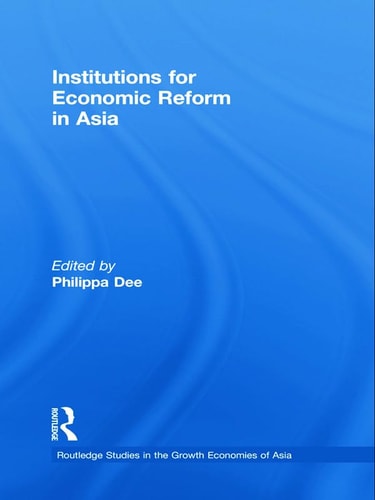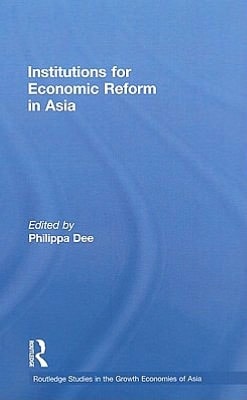
Institutions for Economic Reform in Asia
0
0
As an Amazon Associate and affiliate partner, Menrva Books earns from qualifying purchases. Learn more
Author Description
In the same way that no economy starts out with the best set of economic policies, no economy starts out with the best institutions to support the policy-making process. Instead, they inherit institutions that reflect their own unique culture and history. The task of structural reform has to be addressed, therefore, in the context of domestic economic and political institutions and processes.Examining the nature of structural economic reform and the institutional circumstances in which it succeeds or is inhibited, this volume is less about the content of structural reform and more about how to get there. The chapters develop principles governing the types of institutions that are likely to assist the structural reform process, and then examine the application of those principles within a number of case studies. Finally, the volume presents some ideas about how regional cooperation could help to build and support those institutions that in turn support domestic structural reforms.Consisting of theoretical chapters and country specific case studies, this book draws on experience with structural reform across a range of Asian economies at different stages of economic development. As such it will be of interest to students and scholars of Asian Economics and Development Economics.
Menrva's Summary
THE THESIS
This volume investigates how domestic political and economic institutions influence the success or failure of structural economic reform processes in Asian economies. Author Philippa Dee, an expert in trade and economic policy, argues that reform is not merely a matter of policy content but is fundamentally shaped by the institutional frameworks inherited from a nation's unique history and culture. The book provides a theoretical framework for identifying effective reform-supporting institutions and tests these principles through a series of comparative case studies.
THE SCOPE MAP
What You Will Find
- Theoretical principles governing institutions that facilitate structural reform
- Comparative case studies of various Asian economies at different developmental stages
- Analysis of the intersection between domestic political processes and economic policy implementation
- Proposals for regional cooperation to support the development of reform-oriented domestic institutions
THE AUTHORITY PERSPECTIVE
Experts and scholars in development economics view this work as a practical resource for understanding the institutional barriers to economic change. Readers frequently note that the text bridges the gap between abstract economic theory and the complex political realities of policy implementation in the Asian region.
Page Count:
256
Publication Date:
2009-01-01
Publisher:
Routledge
ISBN-10:
0203874005
ISBN-13:
9780203874004
Economics
Asia
Asian Studies
Public Policy
Institution building -- Asia