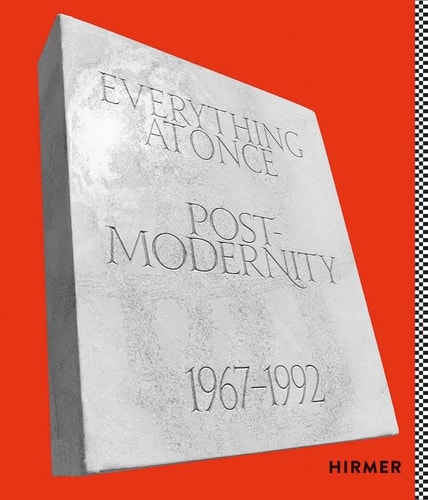
Everything at Once: Postmodernity 1967-1992
0
0
As an Amazon Associate and affiliate partner, Menrva Books earns from qualifying purchases. Learn more
Author Description
Holding up a mirror to the present, the exhibition homes in on our current conflicts - from right-wing populism to identity politics. It allows us to ask, from the distance of a generation, what time we are actually living in. Is Postmodernity really over - or are we in the middle of it? The year 1967 marked the beginning of our present: Modernism, which had presumed that everything could be sorted out through equal housing, furniture and rights for all, was abandoned, and from its ruins a bizarre, eccentric world was born. Architects declared the amusement park the new ideal city; designers shook off the yoke of good taste, and the conflict between the two dominant political systems gave way to the struggle for self-realisation. New media synchronised the globe, and images became the arena in which contests for style and recognition were waged. Showcasing spectacular examples of design, architecture, cinema, pop, philosophy, art and literature, the exhibition chronicles the dawn of the information society, the unleashing of the financial markets, the great age of subcultures, disco, punk and techno-pop, shoulder pads and Memphis furniture. It also chronicles the sudden surge in the construction of museums, the new temples of art and culture, to which we owe the largest exhibit, the Bundeskunsthalle itself. When the Bundeskunsthalle opened in 1992, the Cold War was over, and Francis Fukuyama published his famous book, in which he proclaimed 'the end of history' as such. Thirty years later, it is clear that history did not come to an end, and Postmodernism is once again a matter of considerable debate.
Menrva's Summary
THE THESIS
The book investigates the cultural and societal shifts that defined the postmodern era from 1967 to 1992. It examines how the abandonment of Modernism's ideals led to a radical reimagining of urbanism, design, and politics, characterized by a focus on self-realization and the rise of the information society. The text explores the impact of new media, the liberalization of financial markets, and the emergence of distinct subcultures, all within the context of a world grappling with the end of the Cold War and the concept of 'the end of history.'
THE SCOPE MAP
- Analysis of postmodernism's impact on architecture, design, cinema, pop culture, philosophy, and literature.
- Exploration of the dawn of the information society and the unleashing of financial markets.
- Examination of the rise of subcultures, including disco, punk, and techno-pop.
- Discussion of key aesthetic trends such as shoulder pads and Memphis furniture.
- Coverage of the surge in museum construction and the role of cultural institutions.
- Contextualization within the end of the Cold War and the 'end of history' debate.
THE AUTHORITY PERSPECTIVE
The book frames postmodernity as a period that fundamentally reshaped contemporary society, challenging the perceived end of history and sparking ongoing debate about its relevance. It highlights the era's embrace of eclectic styles and the shift towards individual self-realization, contrasting it with the preceding modernist ideals. The text suggests that the period between 1967 and 1992 laid the groundwork for many of today's cultural and political conflicts. The Bundeskunsthalle's own existence is presented as a product of this postmodern cultural explosion.
Page Count:
284
Publication Date:
2024-01-01
Publisher:
Hirmer
ISBN-10:
3777442763
ISBN-13:
9783777442761
Art
Non-Fiction
Architecture
History
Philosophy
Social History
Art History
Design history
Cultural History
Community Tags
Similar Books














