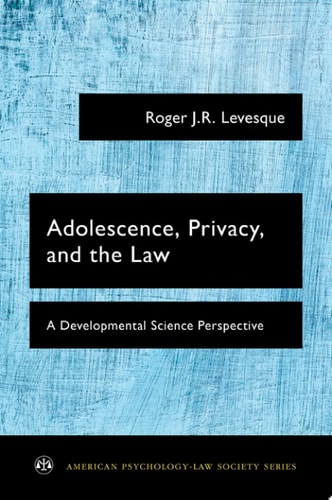
Adolescence, Privacy, and the Law: A Developmental Science Perspective
0
0
As an Amazon Associate and affiliate partner, Menrva Books earns from qualifying purchases. Learn more
Author Description
Adolescence, Privacy, and the Law provides a foundation for understanding privacy rights and how they relate to adolescents. Roger Levesque argues that because privacy is actually an inherently social phenomenon, the ways in which adolescents' privacy needs and rights are shaped are essential to society's broader privacy interests. A close look at empirical understandings of privacy, how it shapes development, and how privacy itself can be shaped provides important lessons for addressing the critical juncture facing privacy rights and privacy itself.Adolescence, Privacy, and the Law provides an overview of the three major strands of privacy rights: decisional, spatial, and informational, and extends current understandings of these strands and how the legal system addresses adolescents and their legal status. Levesque presents comprehensive and specific analyses of the place of privacy in adolescent development and its outcomes, the influences that shape adolescents' expectations and experiences of privacy, and ways to effectively shape adolescents' use of privacy. He explains why privacy law must move in new directions to address privacy needs and pinpoints the legal foundation for moving in new directions. The book charts broad proposals to guide the development of sociolegal responses to changing social environments related to the privacy of adolescents and challenges jurisprudential analyses claiming that developmental sciences do not offer important and useful tools to guide responses to adolescents' privacy. Lastly, Levesque responds to likely criticisms that may hamper the development of sociolegal stances more consistent with adolescents' needs for privacy as well as with societal concerns about privacy.
Menrva's Summary
THE THESIS
This work investigates the intersection of adolescent development and legal privacy rights, arguing that privacy is an inherently social phenomenon that requires a more nuanced legal framework. Roger J.R. Levesque, a scholar in the field of psychology and law, utilizes empirical developmental research to challenge existing jurisprudential assumptions. He posits that current legal structures fail to adequately address the evolving privacy needs of adolescents and proposes a new sociolegal approach that integrates developmental science into the creation of privacy policy.
THE SCOPE MAP
What You Will Find
- Analysis of three primary privacy strands: decisional, spatial, and informational.
- Examination of how developmental stages influence adolescent expectations of privacy.
- Proposals for reforming legal responses to privacy in changing social environments.
Scope Limits
- The text focuses primarily on the American legal context and may not reflect global variations in privacy jurisprudence.
- It does not provide a comprehensive history of all privacy legislation, focusing instead on the specific nexus of adolescence and law.
THE AUTHORITY PERSPECTIVE
Experts in the American Psychology-Law Society recognize this text as a significant contribution to the integration of developmental science into legal discourse. Readers frequently note the academic density of the prose and the author's rigorous defense of using scientific data to inform judicial decision-making.
Page Count:
232
Publication Date:
2016-08-31
Publisher:
Oxford University Press
ISBN-10:
0190460792
ISBN-13:
9780190460792
Psychology
Socialization
United States
Sociology
Law
Privacy Rights
Community Tags
Similar Books