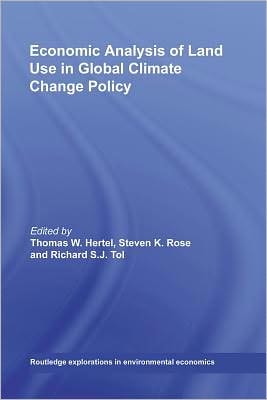
Economic Analysis Of Land Use In Global Climate Change Policy
0
0
As an Amazon Associate and affiliate partner, Menrva Books earns from qualifying purchases. Learn more
Author Description
Land has long been overlooked in economics. That is now changing. A substantial part of the solution to the climate crisis may lie in growing crops for fuel and using trees for storing carbon. This book investigates the potential of these options to reduce greenhouse gas emissions, estimates the costs to the economy, and analyses the trade-offs with growing food. The first part presents new databases that are necessary to underpin policy-relevant research in the field of climate change while describing and critically assessing the underlying data, the methodologies used, and the first applications.Together, the new data and the extended models allow for a thorough and comprehensive analysis of a land use and climate policy. This book outlines key empirical and analytical issues associated with modelling land use and land use change in the context of global climate change policy. It places special emphasis on the economy-wide competition for land and other resources, especially; The implications of changes in land use for the cost of climate change mitigation, Land use change as a result of mitigation, and Feedback from changes in the global climate to land use. By offering synthesis and evaluation of a variety of different approaches to this challenging field of research, this book will serve as a key reference for future work in the economic analysis of land use and climate change policy.
Menrva's Summary
THE THESIS
This book investigates the economic viability and systemic trade-offs of utilizing land-based strategies, such as biofuel production and carbon sequestration, to mitigate global climate change. Thomas W. Hertel, a prominent economist in the field of global trade and land use, synthesizes complex data to evaluate how land competition impacts food security and climate policy. The work provides a rigorous framework for understanding the interplay between agricultural production, resource allocation, and the broader economic costs associated with greenhouse gas mitigation efforts.
THE SCOPE MAP
What You Will Find
- Comprehensive databases designed for policy-relevant climate change research
- Methodologies for modeling land use change and its feedback loops with the global climate
- Quantitative analysis of the competition for land between food production and carbon storage
- Empirical assessment of the economic costs associated with various climate mitigation policies
THE AUTHORITY PERSPECTIVE
Experts recognize this work as a foundational text for researchers and policymakers navigating the intersection of agricultural economics and climate science. Readers frequently note the technical density of the prose, which is intended for an audience familiar with economic modeling and empirical analysis.
Page Count:
368
Publication Date:
2009-01-01
Publisher:
Routledge
ISBN-10:
0203882962
ISBN-13:
9780203882962
Economics
Sustainability
Climatic changes
Climate Change
Land Use
Community Tags
Similar Books