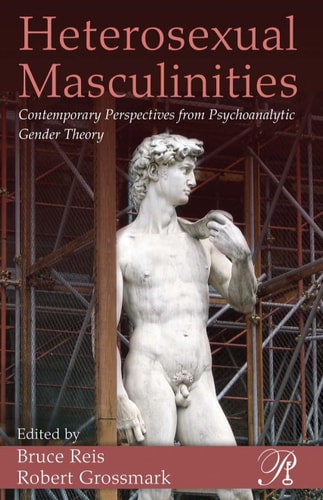
Heterosexual Masculinities
0
0
As an Amazon Associate and affiliate partner, Menrva Books earns from qualifying purchases. Learn more
Author Description
In recent years there have been substantial changes in approaches to how genders are made and what functions genders fulfill. Most of the scholarly focus in this area has been in the areas of feminist, gay, and lesbian studies, and heterosexual masculinity - which tended to be defined by lack and absence - has not received the critical and scholarly attention these other areas have received. Heterosexual Masculinities rethinks a psychoanalytic tradition that has long thought of masculinity as a sort of brittle defense against femininity, softness, and emotionality. Reflecting current trends in psychoanalytic thinking, this book seeks to understand heterosexual masculinity as fluid, multiple, and emergent. The contributors to this insightful volume take new perspectives on relations between men, men’s positions as fathers in relation to their sons and daughters, the clinical encounter with heterosexual men, the social contexts of masculinity, and the multiplicity of heterosexual masculine subjectivities. What to a previous generation would have appeared as pathological or defensive, we now encounter as forms of masculine subjectivity that include wishes for intimacy, receptivity, and surrender, alongside ambition and the pleasures of "phallic narcissism."
Menrva's Summary
THE THESIS
This book investigates the evolving conceptualization of heterosexual masculinity, challenging the traditional psychoanalytic view that defines it solely as a defensive reaction against femininity. Bruce E. Reis and his contributors draw upon contemporary psychoanalytic theory to reframe masculinity not as a static or brittle construct, but as a fluid, multiple, and emergent subjectivity. By analyzing clinical encounters and social contexts, the text argues for a more nuanced understanding of masculine identity that incorporates intimacy, receptivity, and surrender alongside traditional traits like ambition.
THE SCOPE MAP
What You Will Find
- Analysis of the psychoanalytic tradition regarding masculine defense mechanisms.
- Examination of father-child dynamics and their impact on masculine identity formation.
- Clinical perspectives on the treatment and understanding of heterosexual male patients.
- Exploration of the intersection between phallic narcissism and emotional vulnerability.
THE AUTHORITY PERSPECTIVE
Experts recognize this volume as a significant contribution to gender studies, specifically for its effort to move beyond the 'lack and absence' model of heterosexual masculinity. Scholars and clinicians frequently cite the text for its successful integration of modern psychoanalytic theory into the broader discourse on gender identity.
Page Count:
268
Publication Date:
2009-01-01
Publisher:
Routledge
ISBN-10:
0203888316
ISBN-13:
9780203888315
Psychology
Psychoanalysis
Sociology
Masculinity
Gender Studies
Community Tags
Similar Books