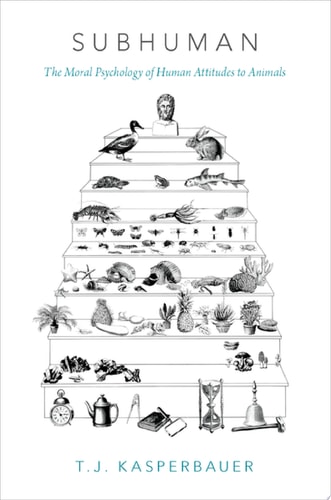
Subhuman: The Moral Psychology of Human Attitudes to Animals
0
0
As an Amazon Associate and affiliate partner, Menrva Books earns from qualifying purchases. Learn more
Author Description
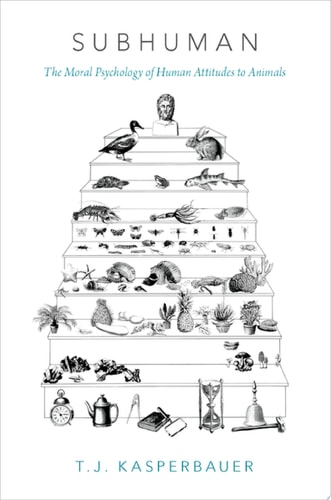
When Harambe, a now-famous gorilla at the Cincinnati Zoo,was shot for endangering a small child, animal rights activists protested, calling into question moral reasoning that privileges the possibility of injury to a human over definite violence to an animal. Many others, though less vehement in their objection, voiced the same questions: was the gorilla any worse than the negligent parents? Doesn't Harambe have rights just like you and me?How do we decide what animals deserve and how we ought to treat them? To what extent are our attitudes towards animals embedded in our subconscious and immune to reason? The foundations of our moral attitudes to animals are more complex than many may appreciate. Subhuman takes an interdisciplinary approach to these questions, drawing from research in philosophy, neuroscience, psychology, law, history, sociology, economics, and anthropology, to unearth surprising revelations about human relationships with animals. T.J. Kasperbauer argues provocatively that behind our positive and negative attitudes to animals is an enduring concern that animals pose a threat to our humanness. Namely, our need to ensure animals' inferiority to human beings affects both our kindness and cruelty to animals. Kasperbauer develops this idea by looking at research on the phenomenon of dehumanization, revealing that our attitudes to other humans are predicted and reflected in our treatment of other species. In making his case, Kasperbauer provides a critical survey of leading theories that range over the role of animals in human evolutionary history, the psychology of meat-eating and keeping pets, feelings of fear and disgust toward animals, the use of animal minds to determine their moral status, and the "expanding moral circle" hypothesis. By exploring the psychological obstacles humans face in meeting ethical demands, Kasperbauer sets forth new and fascinating ways of thinking about our moral obligations to animals, and how we might correct them.
Menrva's Summary
THE THESIS
This book investigates the underlying psychological and moral mechanisms that dictate human attitudes toward animals, specifically questioning why we prioritize human status over animal welfare. T.J. Kasperbauer, a scholar in moral psychology and philosophy, synthesizes research from neuroscience, evolutionary history, and sociology to argue that human treatment of animals is driven by an subconscious need to maintain a sense of human superiority. He posits that our kindness or cruelty toward other species is inextricably linked to our fear of losing our distinct human identity.
THE SCOPE MAP
What You Will Find
- Analysis of the dehumanization phenomenon and its correlation to animal treatment
- Examination of the psychology behind meat-eating and pet ownership
- Review of the 'expanding moral circle' hypothesis in ethical philosophy
- Synthesis of interdisciplinary data from economics, law, and anthropology
Scope Limits
- The text does not provide a prescriptive legal framework for animal rights legislation
- It does not focus on the biological classification of species beyond their psychological impact on humans
THE AUTHORITY PERSPECTIVE
Experts note that this text provides a rigorous interdisciplinary framework for understanding the cognitive biases inherent in human-animal interactions. Readers frequently highlight the book's ability to bridge the gap between abstract moral philosophy and empirical psychological research.
Page Count:
248
Publication Date:
2017-01-01
Publisher:
Oxford University Press
ISBN-10:
0190695838
ISBN-13:
9780190695835
Non-Fiction
Philosophy
Psychology
Sociology
Animal Ethics
Anthropology
Mind & Body
Community Tags
Other Editions(2)
Similar Books











Reader Comments
Share Your Thoughts
No comments yet. Be the first to share your thoughts!