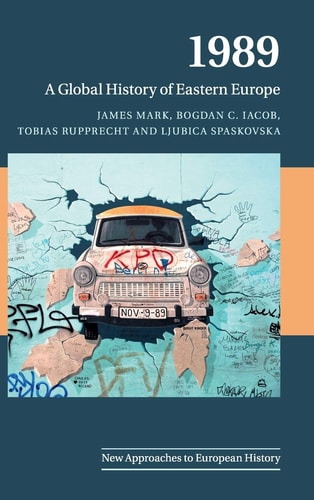
1989
0
0
As an Amazon Associate and affiliate partner, Menrva Books earns from qualifying purchases. Learn more
Author Description
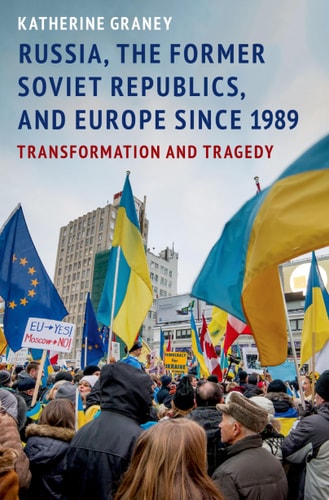
The collapse of the Berlin Wall has come to represent the entry of an isolated region onto the global stage. On the contrary, this study argues that communist states had in fact long been shapers of an interconnecting world, with '1989' instead marking a choice by local elites about the form that globalisation should take. Published to coincide with the thirtieth anniversary of the 1989 revolutions, this work draws on material from local archives to international institutions to explore the place of Eastern Europe in the emergence, since the 1970s, of a new world order that combined neoliberal economics and liberal democracy with increasingly bordered civilisational, racial and religious identities. An original and wide-ranging history, it explores the importance of the region's links to the West, East Asia, Africa, and Latin America in this global transformation, reclaiming the era's other visions such as socialist democracy or authoritarian modernisation which had been lost in triumphalist histories of market liberalism.
Menrva's Summary
THE THESIS
This study re-evaluates the significance of the 1989 revolutions, arguing that communist states were active participants in shaping globalization rather than isolated entities. The authors contend that '1989' represented a deliberate choice by local elites regarding the form of globalization, moving beyond triumphalist narratives of market liberalism. Drawing on extensive archival research, the book examines the emergence of a new world order since the 1970s, characterized by a blend of neoliberal economics, liberal democracy, and increasingly defined civilizational, racial, and religious identities. It highlights the crucial role of Eastern Europe's connections with the West, East Asia, Africa, and Latin America in this global transformation, while also reclaiming alternative visions like socialist democracy and authoritarian modernization that were overshadowed by market liberalism's ascendancy.
THE SCOPE MAP
- Analysis of the 1989 revolutions and their impact on global political and economic structures.
- Exploration of the role of local elites in shaping the form of globalization.
- Examination of the emergence of a new world order combining neoliberal economics and liberal democracy with bordered identities.
- Investigation of Eastern Europe's connections to the West, East Asia, Africa, and Latin America.
- Reclamation of alternative visions of the era, such as socialist democracy and authoritarian modernization.
- Use of material from local archives to international institutions.
- Focus on the period since the 1970s in the context of global transformation.
THE AUTHORITY PERSPECTIVE
Published to coincide with the thirtieth anniversary of the 1989 revolutions, this work is presented as an original and wide-ranging history. The authors' approach, drawing on extensive archival material, aims to offer a nuanced perspective on the period. The book seeks to reclaim alternative visions of the era that have been lost in more triumphalist accounts of market liberalism's success. Its scope extends beyond Eastern Europe to consider global transformations and the region's place within them.
Page Count:
372
Publication Date:
2019-08-29
Publisher:
Cambridge University Press
ISBN-10:
1108427006
ISBN-13:
9781108427005
Non-Fiction
History
International relations
Neoliberalism
Democracy
Global Studies
Community Tags
Similar Books