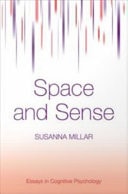
Space and Sense
0
0
As an Amazon Associate and affiliate partner, Menrva Books earns from qualifying purchases. Learn more
Author Description
Includes bibliographical references (p. 195-220) and indexes.Concepts of space and the senses: a brief historical perspective -- Spatial coding as integrative processing of inputs from vision, touch and movement: the reference hypothesis -- Reference cues in large-scale space -- Hand movements and spatial reference in shapes and small-scale space -- External and body-centered reference in haptic memory -- Visual illusions that occur in touch -- Mller-Lyer shapes -- What does vision contribute to touch? -- How far have we got? Where are we going?Electronic reproduction.Palo Alto, Calif.Available via World Wide Web.
Menrva's Summary
THE THESIS
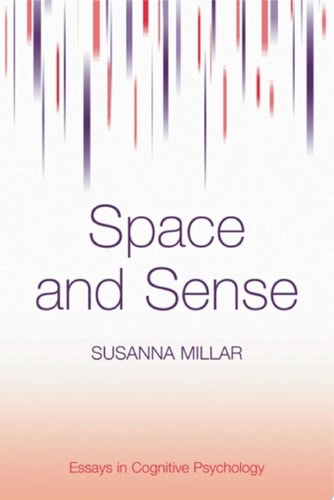
This book investigates how the human brain integrates sensory inputs from vision, touch, and movement to construct a coherent understanding of spatial environments. Susanna Millar, a researcher in developmental and cognitive psychology, examines the mechanisms of spatial coding and reference systems. By analyzing how individuals process spatial information across different scales, the author argues that spatial perception is an integrative process rather than a collection of isolated sensory experiences.
THE SCOPE MAP
What You Will Find
- Historical overview of spatial perception theories and concepts.
- Analysis of spatial coding through vision, touch, and kinesthetic movement.
- Examination of reference cues in both large-scale environments and small-scale object manipulation.
- Discussion of visual illusions and their manifestation within haptic sensory processing.
THE AUTHORITY PERSPECTIVE
Experts recognize this work as a detailed exploration of haptic memory and cross-modal sensory integration. Readers frequently note the academic density of the prose, which serves as a specialized resource for students and researchers in cognitive psychology.
Page Count:
0
Publication Date:
1900-01-01
Publisher:
Psychology Press/Taylor & Francis
ISBN-10:
020393864X
ISBN-13:
9780203938645
Psychology
Science
Neuroscience
Perception
Touch
Community Tags
Other Editions(3)
Similar Books