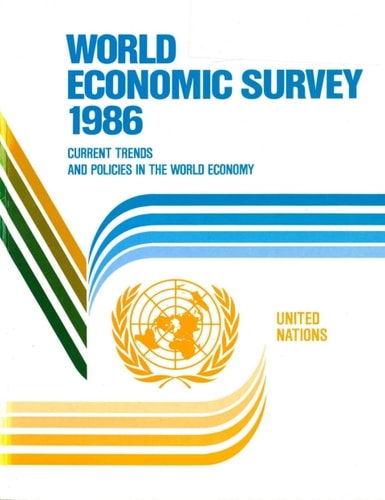
World Economic Survey 1986
0
0
As an Amazon Associate and affiliate partner, Menrva Books earns from qualifying purchases. Learn more
Author Description
The large imbalances in trade and payments that have in recent years characterized the world economy persisted in 1985 and early 1986. In particular, unprecedented disequilibrium prevailed in the trade and financial relations of major industrial countries, and there was a continued overall net transfer of resources from developing to developed countries, largely related to the international debt crisis. Both of these situations were, in the course of 1985, increasingly perceived as unsustainable, economically as well as politically.
Menrva's Summary
THE THESIS
The World Economic Survey 1986 examines the persistent global economic imbalances of the mid-1980s. The report details the significant trade and payment disparities that characterized the world economy in 1985 and early 1986, with a particular focus on the unprecedented disequilibrium in the financial relations between major industrial nations. It also addresses the ongoing net transfer of resources from developing to developed countries, largely driven by the international debt crisis, and the growing perception of these situations as unsustainable.
THE SCOPE MAP
- Analysis of major industrial countries' trade and financial relations.
- Examination of resource transfer from developing to developed nations.
- Discussion of the international debt crisis and its economic impact.
- Assessment of the sustainability of global economic imbalances.
- Overview of the world economy in 1985 and early 1986.
THE AUTHORITY PERSPECTIVE
The World Economic Survey 1986, as a publication from the United Nations, is expected to provide a comprehensive and data-driven analysis of the global economic landscape of its time. Its focus on trade imbalances, resource transfers, and the debt crisis suggests a detailed examination of macroeconomic trends and policy challenges. The report likely serves as a key reference for understanding the economic conditions and international financial dynamics of the mid-1980s, offering insights into the interconnectedness of national economies and the systemic risks present.
Page Count:
848
Publication Date:
1986-04-09
Publisher:
United Nations
ISBN-10:
9210452151
ISBN-13:
9789210452151
Non-Fiction
Economics
International Trade
Global Economy
International relations
Community Tags
Similar Books