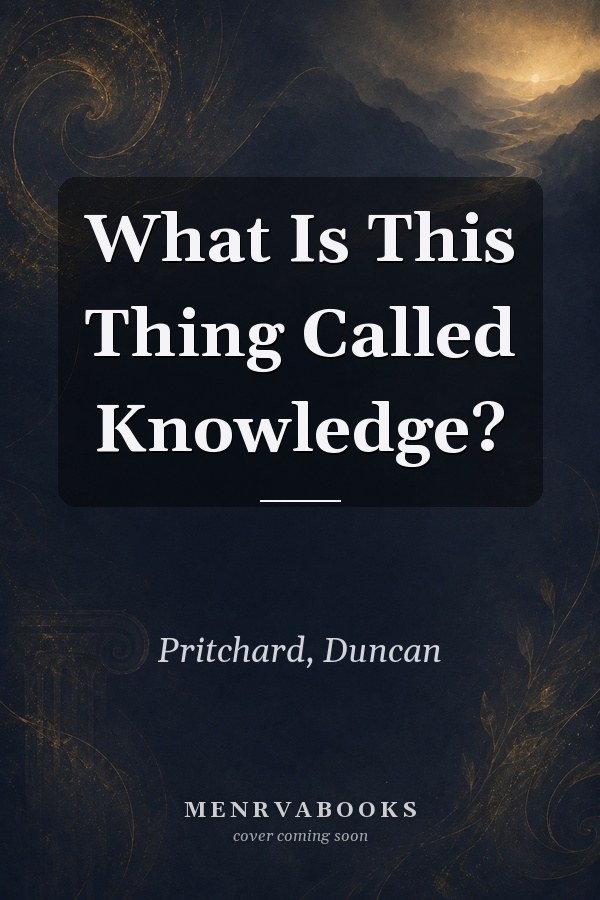
What Is This Thing Called Knowledge?
Author Description
What Is Knowledge? Where Does It Come From? Can We Know Anything At All? This Lucid And Engaging Introduction Grapples With These Central Questions In The Theory Of Knowledge, Offering A Clear, Non-partisan View Of The Main Themes Of Epistemology Including Recent Developments Such As Virture Epistemology And Contextualism. Duncan Pritchard Discusses Both Traditional Issues And Contemporary Ideas In Thirteen Easily Digestible Sections Which Include: The Value Of Knowledge The Structure Of Knowledge Virtues And Faculties Perception Testimony And Memory Induction Scepticism. What Is This Thing Called Knowledge? Contains Many Helpful Student-friendly Features. Each Chapter Concludes With A Useful Summary Of The Main Ideas Discussed, A Glossary Of Important Terms, Study Questions, Annotated Further Reading, And A Guide To Web Resources. Text-boxes Provide Bite-sized Summaries Of Key Concepts And Major Philosophers, And Clear And Interesting Examples Are Used Throughout. This Is An Ideal First Textbook In The Theory Of Knowledge For Undergraduates Taking A First Course In Philosophy.
Menrva's Summary
THE THESIS
This book investigates the foundational nature of knowledge, addressing the core question of whether human beings can possess genuine knowledge and how it is acquired. Duncan Pritchard, a prominent philosopher, utilizes a non-partisan framework to synthesize traditional epistemological inquiries with modern developments. The text provides a structured analysis of how belief, justification, and truth intersect within the broader field of philosophy.
THE SCOPE MAP
What You Will Find
- Analysis of traditional epistemological themes including perception, testimony, and memory.
- Examination of contemporary frameworks such as virtue epistemology and contextualism.
- Pedagogical tools including chapter summaries, glossaries, and annotated reading lists.
- Case studies and examples designed to illustrate complex philosophical concepts for undergraduate students.
THE AUTHORITY PERSPECTIVE
Experts and educators frequently identify this work as a foundational text for undergraduate philosophy courses due to its clarity and accessibility. Readers often note that the book successfully balances academic rigor with a student-friendly structure that simplifies dense theoretical material.
Page Count:
160
Publication Date:
2006-01-01
Publisher:
Taylor & Francis Group
ISBN-10:
0203968468
ISBN-13:
9780203968468
Philosophy
Knowledge Theory
Epistemology
textbook
Academic
Community Tags
Similar Books