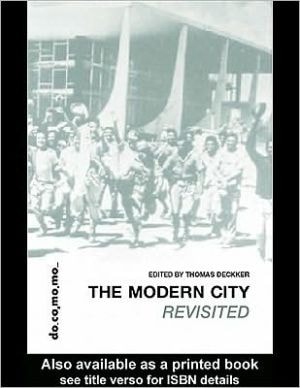
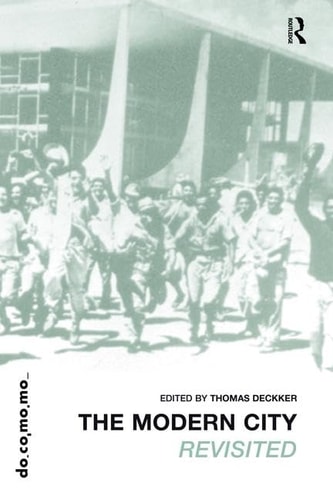
Modern City Revisited
0
0
As an Amazon Associate and affiliate partner, Menrva Books earns from qualifying purchases. Learn more
Author Description
The supposed rationality of the urban planning of the Modern Movement encompassed a variety of attitudes towards history, technology and culture, from the vision of Berlin as an American metropolis, through the dispute between the urbanists and disurbanists in the Soviet Union to the technocratic and austere vision of Le Corbusier. After the Second World War, architects attempted to reconcile these utopian visions to the practical problems of constructing - or reconstructing - urban environments, from Piero Bottoni at the Quartiere Trienale 8 in Milan in 1951 to Lucio Costa at Brasilia in 1957. In the 1970s, the collapse of Modernism brought about universal condemnation of Modern urbanism; urban planning, and rationality itself, were thrown into doubt. However, such a wholesale condemnation hides the complex realities underlying these Modern cities. The contributors define some of the theoretical foundations of Modern urban planning, and reassess the successes and the failures of the built results. The book ends with contrasting views of the inheritance of Modern urbanism in the United States and the Netherlands.
Menrva's Summary
THE THESIS
This book investigates whether the wholesale condemnation of Modernist urban planning in the late 20th century obscures the complex theoretical foundations and practical realities of these built environments. Thomas Deckker, an architect and academic, compiles a series of essays that examine the diverse attitudes toward history, technology, and culture that shaped the Modern Movement. By analyzing specific case studies from the early 20th century through the post-war reconstruction era, the text challenges simplistic narratives of failure by highlighting the nuanced intentions behind these urban designs. The work ultimately seeks to reassess the inheritance of Modernism by contrasting its application in the United States and the Netherlands.
THE SCOPE MAP
What You Will Find
- Historical analysis of urban planning theories from the Soviet Union, Berlin, and Le Corbusier
- Case studies of post-war reconstruction projects including Milan's Quartiere Trienale 8 and Brasilia
- Examination of the 1970s collapse of Modernist consensus and the subsequent critique of urban rationality
- Comparative studies regarding the long-term architectural and social legacy of Modern urbanism
THE AUTHORITY PERSPECTIVE
Experts recognize this text as a valuable contribution to architectural history that provides a necessary corrective to the blanket dismissal of Modernist urbanism. Readers frequently note the academic density of the prose, which makes it a useful resource for students and professionals interested in the intersection of urban theory and historical practice.
Page Count:
0
Publication Date:
2005-01-01
Publisher:
Taylor & Francis Group
ISBN-10:
0203992032
ISBN-13:
9780203992036
Architecture
History
Modernism
urban planning
Urban Design
Community Tags
Other Editions(3)

Similar Books