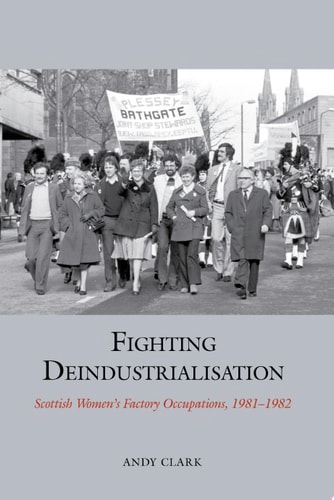
Fighting Deindustrialisation: Scottish Women's Factory Occupations, 1981-1982
0
0
As an Amazon Associate and affiliate partner, Menrva Books earns from qualifying purchases. Learn more
Author Description
In Fighting Deindustrialisation, Andy Clark outlines and examines one of the most significant and under-researched periods in modern Scottish labour history. Over a fourteen month period in 1981 and 1982, as Scotland suffered the effects of the accelerated deindustrialisation of its economy, three workforces refused to accept the loss of their jobs. The predominantly women assembly workers at Lee Jeans (Greenock), Lovable Bra (Cumbernauld), and Plessey Capacitors (Bathgate) were informed that their multinational employers had taken the decisions to close their plants. At each site, a battle was fought against capital movement, corporate greed, and unfair jobloss. The workers occupied their factories and refused to vacate until their demands were met and closure avoided. At all sites this objective was achieved; none of the factories completely closed following the women's occupations. In this book, these occupations are analysed together for the first time, through a range of analytical frameworks from oral history, memory studies, industrial relations scholarship, and deindustrialisation studies. In his extensive examination, Clark argues that the actions of 1981-82 should be considered as one of the most significant periods in Scotland's history of deindustrialisation. However, the public memory of 1981-82 is precarious; Fighting Deindustrialisation begins the process of incorporating women's militant resistance within academic and popular understandings of working-class activism in later 20th century-Scotland.
Menrva's Summary
THE THESIS
This book examines the pivotal 1981-1982 factory occupations by predominantly female workforces in Scotland during a period of intense deindustrialization. Andy Clark analyzes the resistance of assembly workers at Lee Jeans, Lovable Bra, and Plessey Capacitors who occupied their plants to prevent closure. The book explores their battles against capital movement and corporate decisions, utilizing frameworks from oral history, memory studies, industrial relations, and deindustrialization studies. Clark posits that these occupations represent a significant, yet often overlooked, moment in Scotland's deindustrialization history, aiming to integrate this militant women's resistance into broader understandings of working-class activism.
THE SCOPE MAP
- Analysis of the Lee Jeans (Greenock), Lovable Bra (Cumbernauld), and Plessey Capacitors (Bathgate) factory occupations.
- Examination of the 1981-1982 period of accelerated deindustrialization in Scotland.
- Exploration of the workers' resistance against capital movement, corporate greed, and unfair job loss.
- Application of analytical frameworks from oral history and memory studies.
- Integration of industrial relations scholarship and deindustrialization studies.
- Argument for the significance of these occupations within Scotland's deindustrialization history.
- Focus on incorporating women's militant resistance into academic and popular understandings of working-class activism.
THE AUTHORITY PERSPECTIVE
The book is presented as a significant contribution to understanding modern Scottish labor history, focusing on an under-researched period of women's activism. It aims to rectify the precarious public memory of these events by incorporating the militant resistance of factory workers into both academic and popular discourse. The analysis draws on multiple scholarly disciplines to build its case for the importance of these occupations.
Page Count:
264
Publication Date:
2022-01-01
Publisher:
Liverpool University Press
ISBN-10:
1802077111
ISBN-13:
9781802077117
Non-Fiction
History
Scottish History
Social History
Labor history
Community Tags
Similar Books