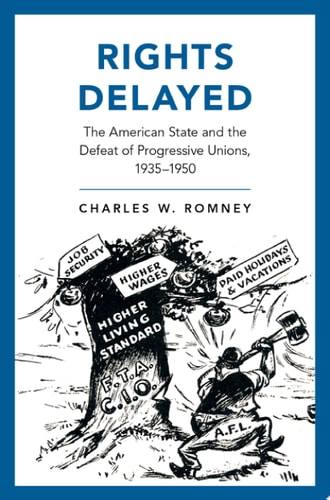
Rights Delayed: The American State and the Defeat of Progressive Unions, 1935-1950
0
0
As an Amazon Associate and affiliate partner, Menrva Books earns from qualifying purchases. Learn more
Author Description
Progressive unions flourished in the 1930s by working alongside federal agencies created during the New Deal. Yet in 1950, few progressive unions remained. Why? Most scholars point to domestic anti-communism and southern conservatives in Congress as the forces that diminished the New Deal state, eliminated progressive unions, and destroyed the radical potential of American liberalism. Rights Delayed: The American State and the Defeat of Progressive Unions argues that anti-communism and Congressional conservatism merely intensified the main reason for the decline of progressive unions: the New Deal state's focus on legal procedure. Initially, progressive unions thrived by embracing the procedural culture of New Deal agencies and the wartime American state. Between 1935 and 1945, unions mastered the complex rules of the NLRB and other federal entities by working with government officials. In 1946 and 1947, however, the emphasis on legal procedure made the federal state too slow to combat potentially illegal cooperation between employers and the Teamsters. Workers who supported progressive unions rallied around procedural language to stop what they considered Teamster collusion, but found themselves dependent on an ineffective federal state. The state became even less able to protect employees belonging to left-led unions after the Taft-Hartley Act's anti-communist provisions-and decisions by union leaders-limited access to the NLRB's procedures. From 1946 until 1950, progressive unions withered and eventually disappeared from the Pacific canneries as the unions failed to pay the cost of legal representation before the NLRB. Workers supporting progressive unions had embraced procedural language to claim their rights, but by 1950, those workers discovered that their rights had vanished in an endless legal discourse.
Menrva's Summary
THE THESIS
This book investigates why progressive labor unions in the United States experienced a rapid decline between 1935 and 1950, challenging the conventional focus on anti-communism as the primary cause. Charles W. Romney, a scholar of American labor and political history, utilizes archival research and case studies of Pacific cannery unions to argue that the New Deal state's institutional reliance on legal procedure ultimately undermined these organizations. By shifting the focus from political ideology to administrative mechanics, the author demonstrates how the procedural requirements of federal agencies created a dependency that proved fatal when the state failed to act against employer collusion.
THE SCOPE MAP
What You Will Find
- Analysis of the National Labor Relations Board (NLRB) and its procedural influence on union operations.
- Examination of the Pacific cannery industry as a primary case study for union decline.
- Evaluation of the impact of the Taft-Hartley Act on union access to federal legal protections.
Scope Limits
- The study does not provide a comprehensive history of all American labor unions during this period.
- The analysis focuses primarily on the procedural failures of the state rather than broader cultural or social shifts in the American workforce.
THE AUTHORITY PERSPECTIVE
Historians and labor scholars recognize this work as a significant contribution to understanding the institutional limitations of the New Deal era. Readers frequently note the academic density of the prose, which provides a rigorous examination of how administrative law shaped the trajectory of American labor movements.
Page Count:
288
Publication Date:
2016-05-04
Publisher:
Oxford University Press
ISBN-10:
0190250291
ISBN-13:
9780190250294
History
Labor history
United States
Trade Unions
New Deal
American Politics
Community Tags
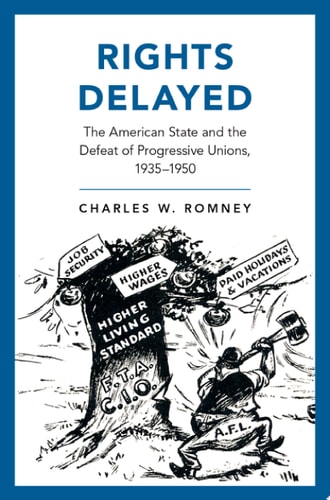
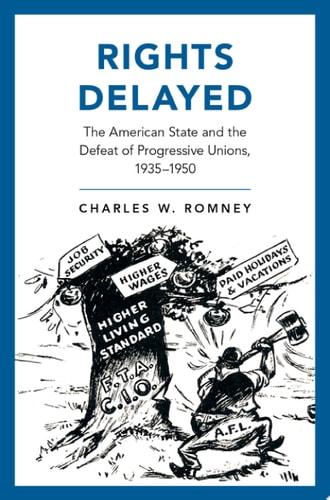
Other Editions(3)
Similar Books




Reader Comments
Share Your Thoughts
No comments yet. Be the first to share your thoughts!