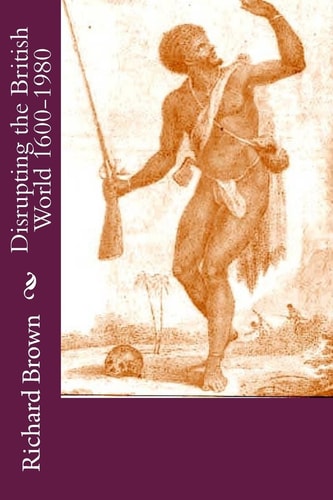
Disrupting the British World 1600-1980
0
0
As an Amazon Associate and affiliate partner, Menrva Books earns from qualifying purchases. Learn more
Author Description
From South Africa, Sierra Leone and Mauritius, to Kenya, America, Cyprus and New Zealand, this book is a global sweep of resistance in the British Empire. It is also the third volume of Richard Brown's epic 'Rebellions Quartet'. This volume explores a diverse range of anti-colonial resistance within the British Empire from a broader chronological and geographical perspective using examples from the seventeenth through to the twentieth century. 'Rebellion' is seen as a broad concept encompassing resistance to the authorities as well as direct action. Rebellions include those of slaves, convicts, indentured workers, and indigenous peoples, rebellions caused by taxation, millenarianism, and nationalism; and the eminently 'British coup' in New South Wales, Australia, in 1808, when Governor William Bligh (he of the mutiny on the HMS Bounty) was removed from power by military and settler action. The book concludes by drawing together the differing modes of colonial resistance and rebellion, and how the institutional structures, motives and opportunities, and the relationships between colonists and colonised created the modern world we know today. The opening chapter examines the development and nature of Britain's burgeoning Empire from its origins in the seventeenth century, how it was peopled and governed. Chapter 2 considers the ways in which colonial authorities treated native peoples in Virginia, Australia and New Zealand in their quest for greater access to land and why that treatment, whether legalised by treaty or purchase or by brutal expropriation led to resistance and rebellion. Chapter 3 looks at the question of slavery in the British Empire and the nature of slave resistance and rebellion especially, in Africa and the 'middle passage', in the American colonies, the West Indies and in Mauritius. Although the slave trade was abolished in the British Empire in 1807 and slaves were emancipated after 1833, the consequences of slavery continued to be a problem and
Menrva's Summary
THE THESIS
This book investigates the multifaceted nature of anti-colonial resistance across the vast expanse of the British Empire from the 17th to the 20th centuries. It examines diverse forms of rebellion, including those by slaves, convicts, indentured workers, and indigenous peoples, driven by factors such as taxation, millenarianism, and nationalism. The work analyzes the institutional structures, motivations, and opportunities that shaped these conflicts, as well as the complex relationships between colonists and the colonized, ultimately arguing that these struggles were instrumental in forging the modern world.
THE SCOPE MAP
- Explores anti-colonial resistance across the British Empire, spanning South Africa, Sierra Leone, Mauritius, Kenya, America, Cyprus, and New Zealand.
- Covers a broad chronological scope from the seventeenth through to the twentieth century.
- Defines 'rebellion' broadly to include resistance to authorities and direct action.
- Features examples of slave revolts, convict uprisings, and indigenous resistance.
- Analyzes rebellions triggered by taxation, millenarianism, and nationalism.
- Includes the 1808 'British coup' in New South Wales as a unique case of internal colonial power struggle.
- Examines the development and governance of Britain's burgeoning Empire in its opening chapter.
- Investigates colonial authorities' treatment of native peoples in Virginia, Australia, and New Zealand, and the resulting resistance.
THE AUTHORITY PERSPECTIVE
This volume, the third in Richard Brown's 'Rebellions Quartet,' offers a global sweep of resistance within the British Empire. The book is noted for its broad chronological and geographical perspective, encompassing a diverse range of anti-colonial movements. It draws on examples from the seventeenth to the twentieth centuries, defining rebellion in expansive terms to include various forms of direct action and opposition to authority. The work concludes by synthesizing these differing modes of resistance and their impact on the formation of the modern world.
Page Count:
612
Publication Date:
2017-02-21
Publisher:
CreateSpace Independent Publishing Platform
ISBN-10:
1541336283
ISBN-13:
9781541336285
Non-Fiction
History
Global History
Colonialism
Community Tags
Similar Books