An Imperial Disaster
0
0
As an Amazon Associate and affiliate partner, Menrva Books earns from qualifying purchases. Learn more
Author Description
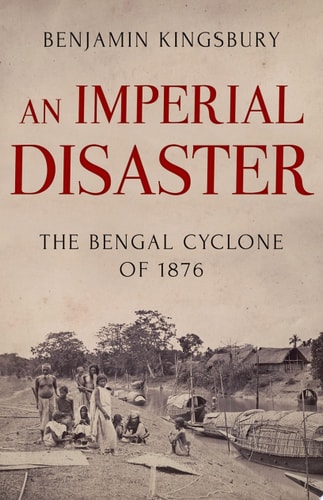
The Storm Came On The Night Of 31 October. It Was A Full Moon, And The Tides Were At Their Peak; The Great Rivers Of Eastern Bengal Were Full Of Monsoon Rain. In The Early Hours The Inhabitants Of The Coast And Islands Were Overtaken By An Immense Wave From The Bay Of Bengal -- A Wall Of Water That Reached A Height Of 40 Feet In Some Places. The Wave Swept Away Everything In Its Path, Drowning Around 215,000 People. At Least Another 100,000 Died In The Cholera Epidemic And Famine That Followed. It Was The Worst Calamity Of Its Kind In Recorded History. Such Events Are Often Described As Natural Disasters. Kingsbury Turns That Interpretation On Its Head, Showing That The Cyclone Of 1876 Was Not Simply A Natural Event, But One Shaped By All-too-human Patterns Of Exploitation And Inequality -- By Divisions Within Bengali Society, And The Enormous Disparities Of Political And Economic Power That Characterized British Rule On The Subcontinent. With Bangladesh Facing Rising Sea Levels And Stronger, More Frequent Storms, There Is Every Reason To Revisit This Terrible Calamity. An Imperial Disaster Is Troubling But Essential Reading: History For An Age Of Climate Change.
Menrva's Summary
THE THESIS
Benjamin Kingsbury investigates whether the 1876 Great Backerganj Cyclone should be categorized as a purely natural disaster or as a consequence of systemic colonial exploitation. The author, a historian specializing in the intersection of climate and governance, utilizes archival records and colonial administrative data to argue that the high mortality rate was exacerbated by the socio-economic structures of British rule in Bengal. By examining the interplay between environmental volatility and political inequality, the work provides a framework for understanding how human systems dictate the severity of climate-related catastrophes.
THE SCOPE MAP
What You Will Find
- Historical analysis of the 1876 Great Backerganj Cyclone in Eastern Bengal.
- Examination of British colonial administrative policies and their impact on local vulnerability.
- Analysis of the subsequent cholera epidemic and famine that followed the storm.
- Comparative insights regarding modern climate change and disaster management.
Scope Limits
- The book does not provide a comprehensive meteorological study of cyclone formation.
- It does not focus on the personal narratives of individual survivors, prioritizing structural and political analysis over anecdotal history.
THE AUTHORITY PERSPECTIVE
Experts highlight this work as a significant contribution to the field of environmental history, particularly for its focus on the human-made components of natural disasters. Readers frequently note the academic density of the prose and the author's rigorous use of historical evidence to challenge traditional interpretations of colonial-era catastrophes.
Page Count:
210
Publication Date:
2018-01-01
Publisher:
Oxford University Press
ISBN-10:
0190050144
ISBN-13:
9780190050146
History
Asian History
Colonialism
Climate Change
Sociology
Environmental History
Community Tags
Similar Books