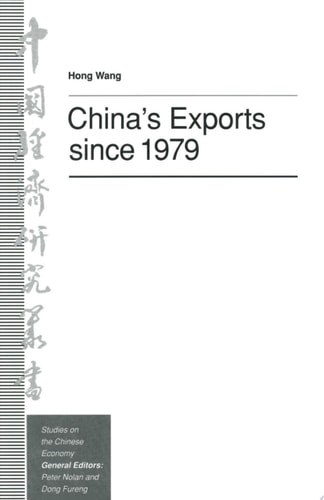
China’s Exports since 1979
0
0
As an Amazon Associate and affiliate partner, Menrva Books earns from qualifying purchases. Learn more
Author Description
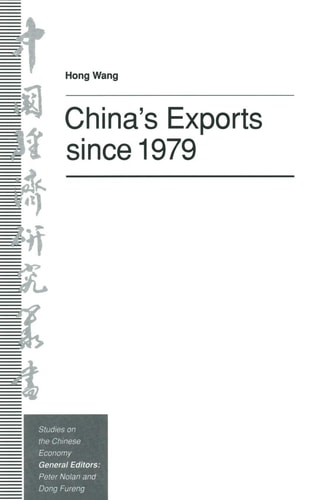
This book examines China's export policies and performance in the post-1978 reform period. In the light of China's experience, it is deeply critical of the Stalinist model, which opposes developing countries' extensive involvement in the world economy. However, it also demonstrates the limitations of the 'export-led' development strategy. This book argues that a high degree of participation in international trade is essential, even for a country of China's huge size, to achieve economic growth of the desired pace and type.The book first surveys the evolution of China's exports in the pre-reform period, especially under Mao. Then it explores the post-1978 changes in the Chinese view of trade theory and policies for export promotion. In assessing these theoretical changes and policies, the book provides a detailed account of China's export development, highlighting one of the important components of China's post-Mao reforms. With rich material and careful analysis, this book will be of interest both to academics in the field of international trade and development economics, as well as to the business community, especially those companies which have set up joint ventures in China or whose export commodities now face major challenges from China in world markets.
Menrva's Summary
THE THESIS
This book investigates the critical role of China's export policies and performance in its post-1978 economic reforms. It critically evaluates the Stalinist model's opposition to developing countries' global economic engagement while simultaneously highlighting the limitations of an 'export-led' development strategy. The author posits that substantial participation in international trade is indispensable for achieving desired economic growth, even for a nation as large as China. The analysis begins with a survey of China's export evolution prior to the reforms, particularly during the Mao era, before delving into the post-1978 shifts in trade theory and export promotion policies.
THE SCOPE MAP
- Evolution of China's exports in the pre-reform period (under Mao).
- Post-1978 changes in Chinese views on trade theory.
- Policies for export promotion implemented after 1978.
- Detailed account of China's export development highlighting key reform components.
- Analysis of the limitations of the 'export-led' development strategy.
- Argument for the necessity of high international trade participation for economic growth.
THE AUTHORITY PERSPECTIVE
This book is positioned as a valuable resource for academics in international trade and development economics, as well as for the business community, particularly those with joint ventures in China or facing significant export competition from China. The analysis is grounded in rich material and careful examination, offering insights into one of the crucial aspects of China's post-Mao economic transformations. The work critically assesses both the benefits of global economic integration and the potential drawbacks of an over-reliance on export-led growth. It provides a detailed historical and theoretical framework for understanding China's economic trajectory.
Page Count:
262
Publication Date:
1992-12-09
Publisher:
Palgrave Macmillan UK
ISBN-10:
1349224715
ISBN-13:
9781349224715
History
Economics
Non-Fiction
International Trade