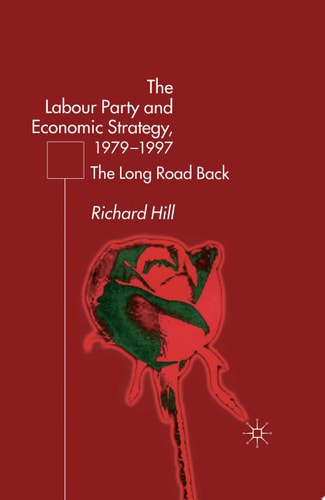
The Labour Party's Economic Strategy, 1979-1997
0
0
As an Amazon Associate and affiliate partner, Menrva Books earns from qualifying purchases. Learn more
Author Description
The book considers Labour's economic strategy as it developed through the party's long period of opposition between 1979 and 1997. This history argues strongly that accounts of Labour's recent past which claim that the Party was driven by a combination of Thatcherism and opinion polls are flawed. It offers an alternative account which stresses the importance of debates within and around the Party about how the economy should be understood, the role of markets and the state, and British industrial decline.
Menrva's Summary
THE THESIS
This book challenges the prevailing narrative that the Labour Party's economic strategy between 1979 and 1997 was solely dictated by Thatcherism and public opinion polls. It presents an alternative historical account, emphasizing the crucial role of internal and external debates within the Labour Party concerning economic understanding, the balance between markets and the state, and the persistent issue of British industrial decline. The author, R. Hill, critically examines the intellectual and ideological currents that shaped Labour's economic policies during its extended period in opposition.
THE SCOPE MAP
- Analysis of the Labour Party's economic strategy from 1979 to 1997.
- Critique of historical accounts attributing Labour's strategy to Thatcherism and opinion polls.
- Exploration of internal and external debates within the Labour Party on economic theory.
- Examination of differing views on the role of markets versus the state in the economy.
- Discussion of the factors contributing to British industrial decline and Labour's response.
- A reinterpretation of the Labour Party's recent political and economic history.
THE AUTHORITY PERSPECTIVE
The book offers a robust re-evaluation of the Labour Party's economic strategy during a pivotal period of opposition. By focusing on intellectual debates and ideological shifts rather than external pressures, it provides a nuanced perspective on the party's development. The work is likely to appeal to students and scholars of British political history, economics, and contemporary political thought seeking a deeper understanding of Labour's evolution.
Page Count:
261
Publication Date:
2001-09-26
Publisher:
Springer Nature
ISBN-10:
0230502954
ISBN-13:
9780230502956
Economics
History
Politics
Non-Fiction
Community Tags
Similar Books