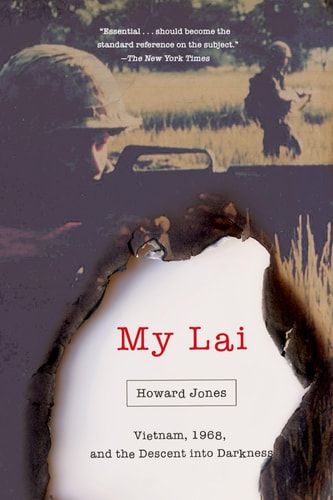
My Lai: Vietnam, 1968, and the Descent into Darkness
0
0
As an Amazon Associate and affiliate partner, Menrva Books earns from qualifying purchases. Learn more
Author Description
On the early morning of March 16, 1968, American soldiers from three platoons of Charlie Company (1st Battalion, 20th Infantry Regiment, 11th Brigade, 23rd Infantry Division), entered a group of hamlets located in the Son Tinh district of South Vietnam, located near the Demilitarized Zone and known as "Pinkville" because of the high level of Vietcong infiltration. The soldiers, many still teenagers who had been in the country for three months, were on a "search and destroy" mission. The Tet Offensive had occurred only weeks earlier and in the same area and had made them jittery; so had mounting losses from booby traps and a seemingly invisible enemy. Three hours after the GIs entered the hamlets, more than five hundred unarmed villagers lay dead, killed in cold blood. The atrocity took its name from one of the hamlets, known by the Americans as My Lai 4.Military authorities attempted to suppress the news of My Lai, until some who had been there, in particular a helicopter pilot named Hugh Thompson and a door gunner named Lawrence Colburn, spoke up about what they had seen. The official line was that the villagers had been killed by artillery and gunship fire rather than by small arms. That line soon began to fray. Lieutenant William Calley, one of the platoon leaders, admitted to shooting the villagers but insisted that he had acted upon orders. An exposé of the massacre and cover-up by journalist Seymour Hersh, followed by graphic photographs, incited international outrage, and Congressional and U.S. Army inquiries began. Calley and nearly thirty other officers were charged with war crimes, though Calley alone was convicted and would serve three and a half years under house arrest before being paroled in 1974.My Lai polarized American sentiment. Many saw Calley as a scapegoat, the victim of a doomed strategy in an unwinnable war. Others saw a war criminal. President Nixon was poised to offer a presidential pardon. The atrocity intensified opposition to the war, dev
Menrva's Summary
THE THESIS
This work investigates the moral and political collapse surrounding the 1968 My Lai massacre, questioning how institutional pressures and the fog of war facilitated such an atrocity. Howard Jones, a distinguished historian, utilizes extensive archival research, military records, and personal testimonies to reconstruct the events of March 16, 1968. He argues that the massacre was not an isolated incident but a symptom of a flawed military strategy and a culture of impunity that permeated the American command structure in Vietnam.
THE SCOPE MAP
What You Will Find
- Detailed reconstruction of the events in Son Tinh district
- Analysis of the subsequent military cover-up and internal investigations
- Examination of the legal proceedings against Lieutenant William Calley
- Documentation of the international political fallout and public polarization
Scope Limits
- Does not provide a comprehensive history of the entire Vietnam War
- Focuses primarily on the American perspective and internal military dynamics rather than the broader Vietnamese civilian experience
THE AUTHORITY PERSPECTIVE
Historians and military scholars frequently cite this work as a definitive, meticulously researched account of the My Lai massacre. Readers often note the academic density of the prose, which provides a sobering and comprehensive look at the ethical failures of the era.
Page Count:
504
Publication Date:
2019-10-01
Publisher:
Oxford University Press
ISBN-10:
0190056703
ISBN-13:
9780190056704
History
Politics
Politics & Government
Americas
United States
Military
American History
Legal History
Professional Career & Trade
Military History
20th Century
Vietnam War
New Used & Rental Textbooks
Law
Political History
Community Tags
Other Editions(3)
Similar Books




Reader Comments
Share Your Thoughts
No comments yet. Be the first to share your thoughts!