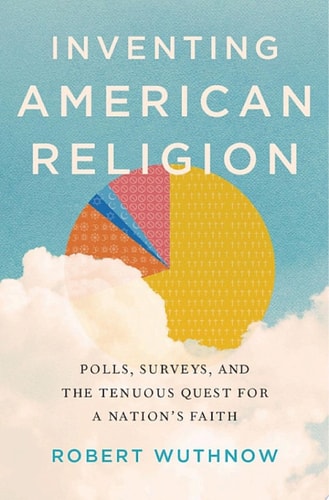
Inventing American Religion: Polls, Surveys, and the Tenuous Quest for a Nation's Faith
0
0
As an Amazon Associate and affiliate partner, Menrva Books earns from qualifying purchases. Learn more
Author Description
Today, a billion-dollar-a-year polling industry floods the media with information. Pollsters tell us not only which political candidates will win, but how we are practicing our faith. How many Americans went to church last week? Have they been born again? Is Jesus as popular as Harry Potter? Polls tell us that 40 percent of Americans attend religious services each week. They show that African Americans are no more religious than white Americans, and that Jews are abandoning their religion in record numbers. According to leading sociologist Robert Wuthnow, none of that is correct. Pollsters say that attendance at religious services has been constant for decades. But during that time response rates in polls have plummeted, robotic "push poll" calls have proliferated, and sampling has become more difficult. The accuracy of political polling can be known because elections actually happen. But there are no election results to show if the proportion of people who say they pray every day or attend services every week is correct. A large majority of the public doubts that polls can be trusted, and yet night after night on TV, polls experts sum up the nation's habits to an eager audience of millions.Inventing American Religion offers a provocative new argument about the influence of polls in contemporary American society. Wuthnow contends that polls and surveys have shaped-and distorted-how religion is understood and portrayed in the media and also by religious leaders, practitioners, and scholars. He calls for a robust public discussion about American religion that extends well beyond the information provided by polls and surveys, and suggests practical steps to facilitate such a discussion, including changes in how the results of polls and surveys are presented.
Menrva's Summary
THE THESIS
This book investigates how the proliferation of polling and survey data has fundamentally constructed and distorted the public understanding of religious practice in the United States. Robert Wuthnow, a prominent sociologist, utilizes his extensive background in the study of American religion to critique the methodology and influence of the modern polling industry. He argues that because religious behavior lacks the verifiable outcome of an election, the data produced by these polls often reflects institutional biases rather than the actual spiritual habits of the American public.
THE SCOPE MAP
What You Will Find
- Analysis of the historical evolution of religious polling in the United States
- Critique of sampling methodologies and declining response rates in modern surveys
- Examination of how media outlets and religious leaders utilize poll data to shape public discourse
- Proposed frameworks for improving the presentation and interpretation of sociological data
Scope Limits
- The book does not provide a comprehensive census of actual American religious beliefs
- It does not focus on the theological validity of specific religious movements
THE AUTHORITY PERSPECTIVE
Experts in sociology and media studies frequently cite this work as a critical examination of the limitations inherent in quantitative religious research. Readers often note the academic rigor of Wuthnow's prose, which serves as a foundational text for those questioning the reliability of popular statistical reporting.
Page Count:
257
Publication Date:
2015-01-01
Publisher:
Oxford University Press
ISBN-10:
0190258926
ISBN-13:
9780190258924
Religion
History
United States
Statistics
American History
Media Studies
Sociology
Community Tags
Similar Books