Skepticism and American Faith
0
0
As an Amazon Associate and affiliate partner, Menrva Books earns from qualifying purchases. Learn more
Author Description
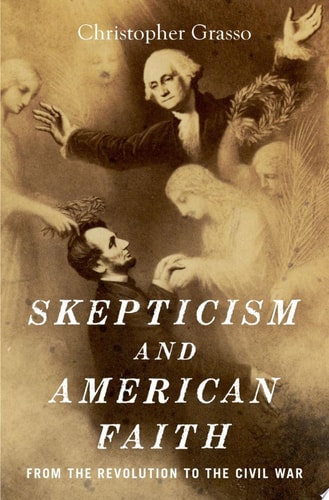
Between The American Revolution And The Civil War, The Dialogue Of Religious Skepticism And Faith Shaped Struggles Over The Place Of Religion In Politics. It Produced Different Visions Of Knowledge And Education In An Enlightened Society. It Fueled Social Reform In An Era Of Economic Transformation, Territorial Expansion, And Social Change. Ultimately, As Christopher Grasso Argues In This Definitive Work, It Molded The Making And Eventual Unmaking Of American Nationalism. Religious Skepticism Has Been Rendered Nearly Invisible In American Religious History, Which Often Stresses The Evangelicalism Of The Era Or The Secularization Said To Be Happening Behind People's Backs, Or Assumes That Skepticism Was For Intellectuals And Ordinary People Who Stayed Away From Church Were Merely Indifferent. Certainly The Efforts Of Vocal Infidels Or Freethinkers Were Dwarfed By The Legions Conducting Religious Revivals, Creating Missions And Moral Reform Societies, Distributing Bibles And Christian Tracts, And Building Churches Across The Land. Even If Few Americans Publicly Challenged Christian Truth Claims, Many More Quietly Doubted, And Religious Skepticism Touched--and In Some Cases Transformed--many Individual Lives. Commentators Considered Religious Doubt To Be A Persistent Problem, Because They Believed That Skeptical Challenges To The Grounds Of Faith--the Bible, The Church, And Personal Experience--threatened The Foundations Of American Society. Skepticism And American Faith Examines The Ways That Americans--ministers, Merchants, And Mystics; Physicians, Schoolteachers, And Feminists; Self-help Writers, Slaveholders, Shoemakers, And Soldiers--wrestled With Faith And Doubt As They Lived Their Daily Lives And Tried To Make Sense Of Their World.
Menrva's Summary
THE THESIS
This work investigates how the persistent tension between religious skepticism and Christian belief shaped the social, political, and national identity of the United States between the American Revolution and the Civil War. Christopher Grasso, a historian of early American culture, utilizes a wide array of primary sources to challenge the historical narrative that characterizes this era solely by its evangelical fervor. He argues that skepticism was not merely an intellectual pursuit for the elite but a pervasive force that influenced the daily lives and moral frameworks of ordinary Americans across diverse social strata.
THE SCOPE MAP
What You Will Find
- Analysis of the interplay between religious doubt and the development of American nationalism.
- Examination of how skepticism influenced debates on education, social reform, and political authority.
- Case studies involving diverse figures including ministers, merchants, physicians, and laborers.
Scope Limits
- The study focuses primarily on the period between the American Revolution and the Civil War.
- It does not provide an exhaustive history of institutional church growth or secularization theories.
THE AUTHORITY PERSPECTIVE
Scholars recognize this text as a significant contribution to the field of American religious history for its recovery of marginalized skeptical voices. Readers frequently note the academic density of the prose and the author's meticulous use of primary source documentation.
Page Count:
496
Publication Date:
2018-01-01
Publisher:
Oxford University Press
ISBN-10:
0190494387
ISBN-13:
9780190494384
History
Sociology of Religion
Intellectual History
American History
Religious History
Community Tags
Similar Books