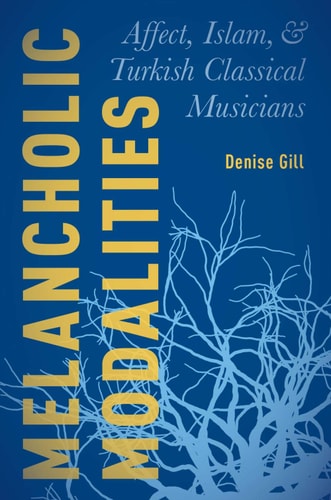
Melancholic Modalities: Affect, Islam, and Turkish Classical Musicians
0
0
As an Amazon Associate and affiliate partner, Menrva Books earns from qualifying purchases. Learn more
Author Description
Today, teachers and performers of Turkish classical music intentionally cultivate melancholies, despite these affects being typically dismissed as remnants of the Ottoman Empire. Melancholic Modalities is the first in-depth historical and ethnographic study of the practices socialized by musicians who enthusiastically teach and perform a present-day genre substantially rooted in the musics of the Ottoman court and elite Mevlevi Sufi lodges. Author Denise Gill analyzes how melancholic music-making emerges as pleasurable, spiritually redeeming, and healing for both the listener and performer.Focusing on the diverse practices of musicians who deploy and circulate melancholy in sound, Gill interrogates the constitutive elements of these musicians' modalities in the context of emergent neoliberalism, secularism, political Islamism, Sufi devotionals, and the politics of psychological health in Turkey today. In an essential contribution to the study of ethnomusicology and psychology, Gill develops rhizomatic analyses to allow for musicians' multiple interpretations to be heard. Melancholic Modalities uncovers how emotion and musical meaning are connected, and how melancholy is articulated in the world of Turkish classical musicians. With her innovative concept of "bi-aurality," Gill's book forges new possibilities for the historical and ethnographic analyses of musics and ideologies of listening for music scholars.
Menrva's Summary
THE THESIS
How do contemporary Turkish classical musicians cultivate and interpret melancholy as a functional, healing, and spiritually significant practice within the shifting political and social landscape of modern Turkey? Author Denise Gill, an ethnomusicologist, utilizes extensive ethnographic fieldwork and historical analysis to examine the intersection of musical performance, affect, and identity. She argues that the deliberate performance of melancholy serves as a bridge between Ottoman-era musical traditions and the complexities of contemporary Turkish life, including neoliberalism and secularism.
THE SCOPE MAP
What You Will Find
- Ethnographic study of Turkish classical music practitioners and Mevlevi Sufi lodge traditions.
- Theoretical framework of "bi-aurality" to analyze listening practices and musical meaning.
- Analysis of the intersection between musical affect and political Islamism, secularism, and psychological health.
Scope Limits
- The study focuses specifically on the professional and social circles of Turkish classical musicians rather than broader popular music genres.
- The research does not provide a comprehensive history of Ottoman music but focuses on the contemporary application of these historical forms.
THE AUTHORITY PERSPECTIVE
Scholars in ethnomusicology recognize this work as a sophisticated contribution to the study of affect and sound, particularly for its innovative conceptualization of listening modalities. Readers frequently note the academic density of the prose, which is intended for advanced students and researchers in musicology and cultural studies.
Page Count:
286
Publication Date:
2017-06-01
Publisher:
Oxford University Press
ISBN-10:
0190495006
ISBN-13:
9780190495008
Melancholy
Middle Eastern
Humanities
Criticism history
Cultural Anthropology
Musicology
Community Tags
Other Editions(2)
Similar Books