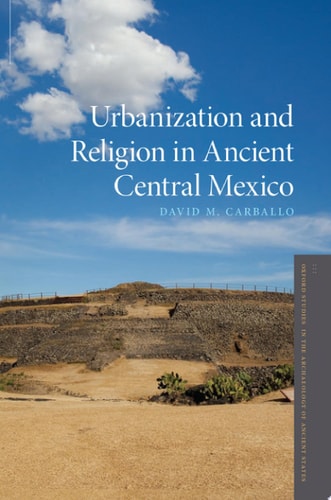
Urbanization and Religion in Ancient Central Mexico (Oxford Studies in the Archaeology of Ancient States)
0
0
As an Amazon Associate and affiliate partner, Menrva Books earns from qualifying purchases. Learn more
Author Description
Urbanization and Religion in Ancient Central Mexico examines the ways in which urbanization and religion intersected in pre-Columbian central Mexico, with a primary focus on the later Formative period and the transition to the Classic period. The major societal transformations of this interval occurred approximately two-thousand years ago and over a millennium before Mexico's best known early civilization, the Aztecs. David M. Carballo presents a synthesis of data from regional archaeological projects and key sites such as Teotihuacan and Cuicuilco, while relying on his own excavations at the site of La Laguna as the central case study. A principal argument is that cities and states developed hand in hand with elements of a religious tradition of remarkable endurance and that these processes were fundamentally entangled. Prevalent religious beliefs and ritual practices created a cultural logic for urbanism, and as populations urbanized they became socially integrated and differentiated following this logic. Nevertheless, religion was used differently over time and by groups and individuals across the spectra of urbanity and social status. The book provides a materially informed history of religion, with the temporal depth that archaeology can provide, and an archaeology of cities that considers religion seriously as a generative force in societal change.
Menrva's Summary
THE THESIS
This book investigates the causal relationship between the development of urban centers and the evolution of religious practices in pre-Columbian central Mexico. David M. Carballo, an archaeologist specializing in Mesoamerican societies, synthesizes regional data from the late Formative and early Classic periods to argue that urbanization and religion were mutually constitutive processes. By examining the material record, he posits that religious traditions provided the cultural framework necessary for the social integration and differentiation required by early urban states.
THE SCOPE MAP
What You Will Find
- Archaeological data from the Formative to Classic period transition.
- Comparative analysis of major sites including Teotihuacan and Cuicuilco.
- A detailed case study of excavations at the site of La Laguna.
- Theoretical framework linking ritual practice to urban social logic.
Scope Limits
- The study focuses specifically on central Mexico and does not cover the later Aztec civilization.
- The analysis is restricted to the material evidence available from archaeological projects rather than textual records.
THE AUTHORITY PERSPECTIVE
Experts recognize this work as a significant contribution to the archaeology of religion, noting its success in moving beyond purely functionalist interpretations of urban growth. Scholars frequently highlight the book's methodological rigor in using site-specific excavations to support broader theoretical arguments about societal change.
Page Count:
290
Publication Date:
2015-01-01
Publisher:
Oxford University Press
ISBN-10:
0190493496
ISBN-13:
9780190493493
History
Religion
Urban Studies
Anthropology
American History
Indians of Mexico
Social change
Archaeology
Cities And Towns
Community Tags
Similar Books