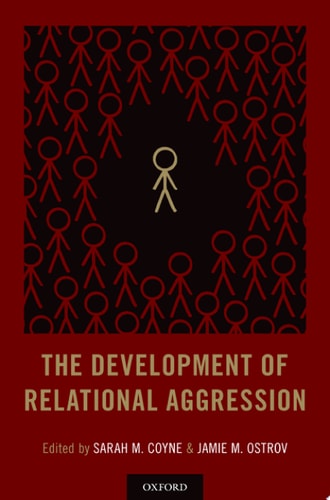
The Development of Relational Aggression
0
0
As an Amazon Associate and affiliate partner, Menrva Books earns from qualifying purchases. Learn more
Author Description
Research Over The Last Few Decades Has Revealed That Individuals Use A Variety Of Mechanisms To Hurt One Another, Many Of Which Are Not Physical In Nature. In This Volume, Editors Sarah M. Coyne And Jamie M. Ostrov Turn Their Focus On Relational Aggression, Behavior That Is Intended To Cause Harm To Another Individual's Relationships Or Social Standing In The Group (e.g., Gossiping, Social Exclusion, And Spreading Malicious Rumors). Unlike Physical Aggression, The Scars Of Relational Aggression Are More Difficult To Detect. However, Victims (and Their Aggressors) May Experience Strong And Long-lasting Consequences, Including Reduced Self-esteem, Loneliness, Depression, Anxiety, And More. Over The Past 25 Years, There Has Been A Growing Body Of Literature On Relational Aggression And Other Non-physical Forms Of Aggression That Have Focused Predominantly On Gender Differences, Development, And Risk And Protective Factors. In This Volume, The Focus Turns To The Development Of Relational Aggression During Childhood, Adolescence, And Emerging Adulthood. Here, Coyne, Ostrov, And Their Contributing Authors Examine A Number Of Risk Factors And Socializing Agents Or Models (e.g., Parenting, Peers, Media, The Classroom) That Lead To The Development Of Relational Aggression Over Time. An Understanding Of How These Behaviors Develop Will Inform Readers Of Important Intervention Strategies To Curb The Use Of Relational Aggression In Schools, Peer Groups, And In Family Relationships. The Development Of Relational Aggression Provides Scholars, Researchers, Practitioners, Students, And Parents With An Extensive Resource That Will Help Move The Field Forward In Our Understanding Of The Development Of Relational Aggression For The Future.
Menrva's Summary
THE THESIS
How does relational aggression manifest and evolve across the developmental stages of childhood, adolescence, and emerging adulthood? Editors Sarah M. Coyne and Jamie M. Ostrov compile a comprehensive analysis of non-physical harm, such as social exclusion and rumor spreading, to identify the mechanisms behind these behaviors. By synthesizing two decades of research, the contributors examine how socializing agents—including parenting styles, peer influence, media consumption, and classroom environments—shape the trajectory of aggressive social behavior. The text provides a framework for understanding the long-term psychological consequences of these actions and proposes evidence-based intervention strategies.
THE SCOPE MAP
What You Will Find
- Longitudinal data on the development of relational aggression from childhood through emerging adulthood.
- Analysis of socializing agents including family dynamics, peer groups, and media exposure.
- Evaluation of psychological outcomes such as depression, anxiety, and diminished self-esteem.
- Proposed intervention strategies for educators, parents, and mental health practitioners.
Scope Limits
- The text focuses primarily on developmental trajectories rather than clinical treatment protocols for severe personality disorders.
- It does not provide an exhaustive history of physical aggression, focusing instead on non-physical mechanisms.
THE AUTHORITY PERSPECTIVE
Experts recognize this volume as a primary resource for researchers and practitioners seeking to understand the nuances of non-physical social harm. Readers frequently note the academic density of the prose, which serves as a foundational text for those studying social development and peer relations.
Page Count:
352
Publication Date:
2018-01-01
Publisher:
Oxford University Press
ISBN-10:
0190491833
ISBN-13:
9780190491833
Psychology
Social Science
Behavioral Science
Developmental Psychology
Sociology
Community Tags
Other Editions(2)

Similar Books




Reader Comments
Share Your Thoughts
No comments yet. Be the first to share your thoughts!