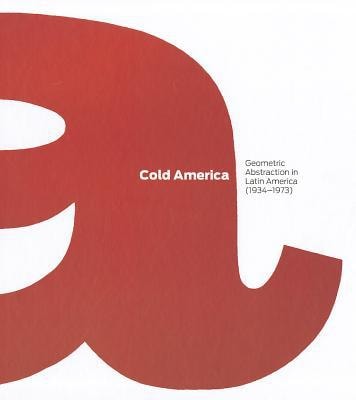
Cold America: Geometric Abstraction in Latin America (1934-1973)
0
0
As an Amazon Associate and affiliate partner, Menrva Books earns from qualifying purchases. Learn more
Author Description
The exhibition sets out to chart the complex and fragmented path of geometric abstraction in Latin America so as to reveal the way in which it renovated and also differed from the constructions and inventions produced by European geometric abstraction. Painting, sculpture, photography, and architecture are represented through the nearly three hundred pieces on display, some never before viewed outside their country of origin, by a total of sixty-four artists from Argentina, Brazil, Colombia, Cuba, Uruguay, Venezuela and Mexico. The exhibition has a specific time frame defined by the dates in which two artists returned to America from Europe: 1934, the year when Joaquín Torres-García settled permanently in Montevideo following his European (and North American) tour, and 1973, when Venezuelan artist Jesus Rafael Soto returned to his native city of Ciudad Bolivar to attend the opening of the museum that carries his name... The exhibition offers a vision of a Latin America that differs from the normal stereotype: rather than a hasty and cliched identification of the continent with the intense heat of spontaneity, or an association of the concept of the indigenous with that of the tropics and the Caribbean, the work of these artists in fact points to a 'cold' South America: objective, geometrical and rational, and one that gave rise to a fascinating and surprising type of abstract art.
Menrva's Summary
THE THESIS
This exhibition explores the development and distinctiveness of geometric abstraction in Latin America between 1934 and 1973. The exhibition traces the complex and fragmented path of this art movement, highlighting how it both renovated and diverged from European geometric abstraction. Featuring nearly three hundred pieces across painting, sculpture, photography, and architecture, it showcases works by sixty-four artists from seven Latin American countries. The chosen timeframe is marked by the return of key artists to the continent from Europe, signifying a pivotal period for abstract art in the region.
THE SCOPE MAP
- The evolution of geometric abstraction in Latin America from 1934 to 1973.
- Comparative analysis of Latin American geometric abstraction against its European counterpart.
- Representation across diverse media: painting, sculpture, photography, and architecture.
- Inclusion of works by sixty-four prominent artists from Argentina, Brazil, Colombia, Cuba, Uruguay, Venezuela, and Mexico.
- Showcasing of pieces previously unseen outside their country of origin.
- Exploration of a 'cold' South America: objective, geometrical, and rational artistic expression.
THE AUTHORITY PERSPECTIVE
The exhibition is framed as a significant exploration of Latin American geometric abstraction, challenging conventional stereotypes of the continent. It positions the art as objective, geometrical, and rational, offering a nuanced perspective that moves beyond simplistic associations with spontaneity or the indigenous. The presentation of works by sixty-four artists, including pieces rarely seen internationally, underscores the depth and breadth of the movement.
Page Count:
504
Publication Date:
2011-01-01
Publisher:
Actar
ISBN-10:
8470755889
ISBN-13:
9788470755880
History
Art
Non-Fiction
Art History
Modern Art
Community Tags
Similar Books














