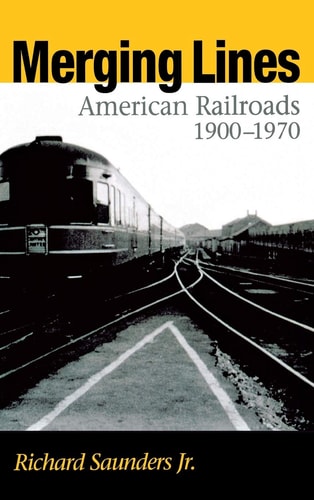
Merging Lines: American Railroads, 1900-1970
0
0
As an Amazon Associate and affiliate partner, Menrva Books earns from qualifying purchases. Learn more
Author Description
Why did American railroads decline from the glory days of the early twentieth century? Why did so many railroad mergers in the 1950s and 1960s, intended as a panacea for the ills of an outdated system, go sour and, in fact, make a bad situation worse? Saunders addresses these and many other issues in this authoritative history of U.S. railroads and their corporate mergers. Beginning with a wide-ranging analysis of the role of railroads in the economic and social fabric of American life, Saunders traces the causes and results of the twentieth century's "merger mania." Mergers, he explains, were expected to save money, to improve service to customers, and to help railroads compete against other modes of transportation, such as the growing airline and trucking industries. Saunders then gives colorful, richly detailed accounts of the mergers and shows the reasons--including corporate greed and the inept blundering of government regulatory agencies--the outcomes fell far short of expectations. Merging Lines explores the impact of shifting political control of railroads as no history has done before. The fates of both workers and railroad companies were dictated by the rise and fall of business and governmental leaders, including Bill Brosnan, Robert R. Young, Alfred Perlman, President John F. Kennedy, and President Lyndon B. Johnson. As power struggles erupted, the original goals of the mergers were thwarted by consumer frustration, violent labor strikes, and organizational collapse. Saunders explores these and other crucial developments in this extensive work, carefully designed for railroad historians and enthusiasts at any level. Encyclopedic in its scope, Merging Lines includes sixty-eight maps, a list of court cases involving railroad mergers, and a wealth of information on American railroads from coast to coast. An extensively revised, updated, and supplemented edition of Saunders's earlier classic, The Railroad Merger
Menrva's Summary
THE THESIS
This book investigates the reasons behind the decline of American railroads from their early twentieth-century prominence and the failure of numerous merger attempts in the mid-twentieth century to revitalize the industry. Richard A. Saunders, an authoritative historian of U.S. railroads, examines the complex interplay of economic, social, and political factors that led to the
THE SCOPE MAP
- An analysis of the role of railroads in the American economic and social fabric.
- Detailed accounts of railroad mergers in the 1950s and 1960s, exploring their intended goals and actual outcomes.
- An examination of the causes of merger failures, including corporate greed and governmental regulatory ineptitude.
- An exploration of the impact of shifting political control on railroads and the fates of workers and companies.
- Sixty-eight maps illustrating railroad networks and merger impacts.
- A list of court cases involving railroad mergers.
- Extensive information on American railroads from coast to coast.
THE AUTHORITY PERSPECTIVE
This authoritative history is a revised and updated edition of Saunders's earlier work, indicating a solid foundation and established readership within the field of railroad history. The book's encyclopedic scope, detailed accounts, and inclusion of maps and legal case lists suggest it is a comprehensive resource for dedicated railroad historians and enthusiasts. The analysis of corporate greed and governmental blundering points to a critical yet thorough examination of the industry's challenges. The work is designed to provide a deep understanding of the forces that shaped American railroads throughout the mid-twentieth century.
Page Count:
486
Publication Date:
2001-01-01
Publisher:
Northern Illinois University Press
ISBN-10:
0875802656
ISBN-13:
9780875802657
Non-Fiction
History
Transportation History
Business History
Community Tags
Similar Books