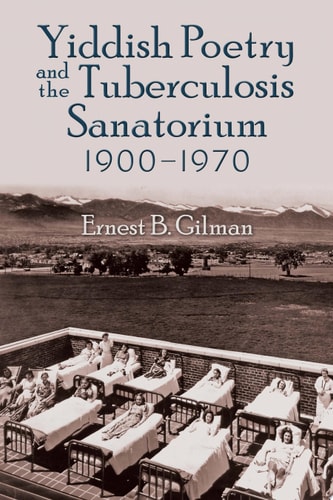
Yiddish Poetry and the Tuberculosis Sanatorium 1900-1970
0
0
As an Amazon Associate and affiliate partner, Menrva Books earns from qualifying purchases. Learn more
Author Description
Part literary history and part medical sociology, Gilman's book chronicles the careers of three major immigrant Yiddish poets of the twentieth century—Solomon Bloomgarten (Yehoash), Sholem Shtern, and H. Leivick—all of whom lived through, and wrote movingly of, their experience as patients in a tuberculosis sanatorium. Gilman addresses both the formative influence of the sanatorium on the writers' work and the culture of an institution in which, before the days of antibiotics, writing was encouraged as a form of therapy. He argues that each writer produced a significant body of work during his recovery, itself an experience that profoundly influenced the course of his subsequent literary career. Seeking to recover the "imaginary" of the sanatorium as a scene of writing by doctors and patients, Gilman explores the historical connection between tuberculosis treatment and the written word. Through a close analysis of Yiddish poems, and translations of these writers, Gilman sheds light on how essential writing and literature were to the sanatorium experience. All three poets wrote under the shadow of death. Their works are distinctive, but their most urgent concerns are shared: strangers in a strange land, suffering, displacement, acculturation, and, inevitably, what it means to be a Jew.
Menrva's Summary
THE THESIS
This book investigates the profound impact of tuberculosis sanatoriums on the careers and writings of three major Yiddish poets. Ernest B. Gilman, drawing on literary history and medical sociology, examines the works of Solomon Bloomgarten (Yehoash), Sholem Shtern, and H. Leivick, who all experienced tuberculosis and wrote about their recovery. The book explores how the sanatorium environment, where writing was encouraged as therapy before antibiotics, shaped their literary output and subsequent careers. Gilman argues that the shared experiences of illness, displacement, and Jewish identity in these institutions fostered a unique literary imaginary, deeply influenced by the constant presence of mortality.
THE SCOPE MAP
- Analysis of the literary careers of Solomon Bloomgarten (Yehoash), Sholem Shtern, and H. Leivick.
- Exploration of the tuberculosis sanatorium as a site of writing and therapy.
- Examination of the influence of illness and recovery on poetic output.
- Discussion of the cultural and social context of Yiddish immigrant poets in the 20th century.
- Close analysis of Yiddish poems and their translations.
- Themes of suffering, displacement, acculturation, and Jewish identity in the context of illness.
- The role of writing as a coping mechanism and therapeutic practice within sanatoriums.
- The intersection of medical treatment and literary creation before the antibiotic era.
THE AUTHORITY PERSPECTIVE
The book is recognized for its interdisciplinary approach, blending literary analysis with insights from medical sociology. It is noted for its detailed examination of the formative influence of the tuberculosis sanatorium on the creative output of prominent Yiddish poets. The work is appreciated for recovering the 'imaginary' of the sanatorium as a space where doctors and patients engaged with writing. Readers and critics highlight its exploration of shared themes such as displacement, suffering, and Jewish identity, all viewed through the lens of mortality and recovery.
Page Count:
187
Publication Date:
2014-12-29
Publisher:
Syracuse University Press
ISBN-10:
0815653069
ISBN-13:
9780815653066
Poetry
History
Literary Fiction
Non-Fiction
Literary History
Jewish Studies
Community Tags
Similar Books