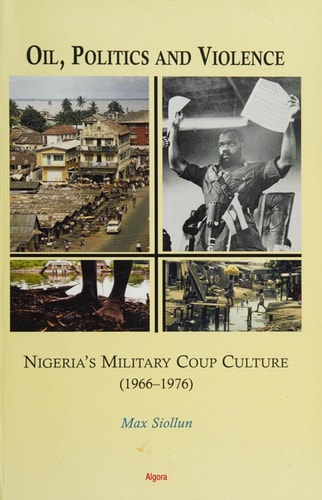
Oil, Politics and Violence: Nigeria's Military Coup Culture (1966-1976)
0
0
As an Amazon Associate and affiliate partner, Menrva Books earns from qualifying purchases. Learn more
Author Description
An insider traces the details of hope and ambition gone wrong in the Giant of Africa, Nigeria, Africa's most populous country. When it gained independence from Britain in 1960, hopes were high that, with mineral wealth and over 140 million people, the most educated workforce in Africa, Nigeria would become Africa s first superpower and a stabilizing democratic influence in the region. However, these lofty hopes were soon dashed and the country lumbered from crisis to crisis, with the democratic government eventually being overthrown in a violent military coup in January 1966. From 1966 until 1999, the army held onto power almost uninterrupted under a succession of increasingly authoritarian military governments and army coups. Military coups and military rule (which began as an emergency aberration) became a seemingly permanent feature of Nigerian politics. The author names names, and explores how British influence aggravated indigenous rivalries. He shows how various factions in the military were able to hold onto power and resist civil and international pressure for democratic governance by exploiting the country's oil wealth and ethnic divisions to its advantage.--Publisher's description.
Menrva's Summary
THE THESIS
The book investigates the critical decade of military rule in Nigeria following its independence, focusing on the interplay of oil wealth, political ambition, and ethnic divisions that fueled a culture of coups. It examines the period from the first military coup in 1966 to 1976, a decade marked by instability and authoritarianism in Africa's most populous nation. The author details how initial hopes for a democratic superpower were dashed, leading to a succession of military governments that exploited the country's oil revenues and ethnic fault lines to maintain power. The narrative also explores the role of British influence in exacerbating existing rivalries within Nigeria.
THE SCOPE MAP
- Analysis of the first decade of military rule in Nigeria (1966-1976).
- Exploration of the role of oil wealth in sustaining military governments.
- Examination of ethnic divisions and their exploitation by political factions.
- Identification of key figures and factions within the military and political landscape.
- Discussion of the impact of British colonial influence on Nigerian politics.
- Contextualization of Nigeria's post-independence political trajectory.
THE AUTHORITY PERSPECTIVE
The book is presented as an in-depth analysis of a pivotal period in Nigerian history, detailing the complex factors that led to prolonged military rule. The publisher's description highlights the author's approach of 'naming names' and exploring how internal rivalries and external influences shaped the nation's political destiny. It suggests a work that delves into the specific mechanisms by which military factions leveraged oil wealth and ethnic tensions to consolidate power. The narrative aims to provide a detailed account of hope and ambition gone awry in a nation with immense potential.
Page Count:
268
Publication Date:
2009-01-01
Publisher:
Algora Publishing
ISBN-10:
087586709X
ISBN-13:
9780875867090
Politics
History
Economics
Non-Fiction
Community Tags
Similar Books














