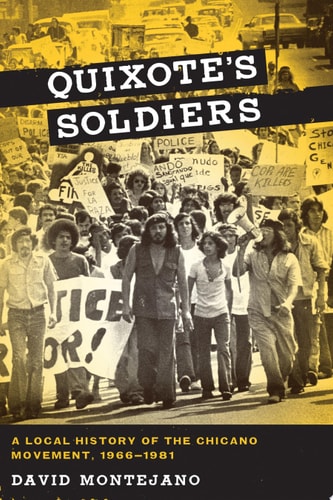
Quixote's Soldiers: A Local History of the Chicano Movement, 1966–1981
0
0
As an Amazon Associate and affiliate partner, Menrva Books earns from qualifying purchases. Learn more
Author Description
In the mid-1960s, San Antonio, Texas, was a segregated city governed by an entrenched Anglo social and business elite. The Mexican American barrios of the west and south sides were characterized by substandard housing and experienced seasonal flooding. Gang warfare broke out regularly. Then the striking farmworkers of South Texas marched through the city and set off a social movement that transformed the barrios and ultimately brought down the old Anglo oligarchy. In Quixote's Soldiers, David Montejano uses a wealth of previously untapped sources, including the congressional papers of Henry B. Gonzalez, to present an intriguing and highly readable account of this turbulent period. Montejano divides the narrative into three parts. In the first part, he recounts how college student activists and politicized social workers mobilized barrio youth and mounted an aggressive challenge to both Anglo and Mexican American political elites. In the second part, Montejano looks at the dynamic evolution of the Chicano movement and the emergence of clear gender and class distinctions as women and ex-gang youth struggled to gain recognition as serious political actors. In the final part, Montejano analyzes the failures and successes of movement politics. He describes the work of second-generation movement organizations that made possible a new and more representative political order, symbolized by the election of Mayor Henry Cisneros in 1981.
Menrva's Summary
THE THESIS
The Chicano Movement in San Antonio challenged a deeply entrenched Anglo social and business elite, transforming the city's barrios and political landscape. David Montejano's work details the period from 1966 to 1981, focusing on how college student activists and social workers mobilized barrio youth to confront both Anglo and Mexican American political establishments. The narrative explores the movement's evolution, highlighting the emergence of gender and class distinctions as women and former gang members sought political recognition. Ultimately, the book analyzes the successes and failures of movement politics, culminating in the establishment of a more representative political order symbolized by Henry Cisneros's election in 1981.
THE SCOPE MAP
- An account of the Chicano Movement in San Antonio, Texas, from 1966 to 1981.
- Analysis of the social, economic, and political conditions in Mexican American barrios.
- Details on the mobilization of youth and the challenges posed to established political elites.
- Exploration of gender and class dynamics within the movement.
- Examination of the successes and failures of movement politics.
- Use of previously untapped sources, including the congressional papers of Henry B. Gonzalez.
- The eventual rise of a new political order, exemplified by the election of Mayor Henry Cisneros.
THE AUTHORITY PERSPECTIVE
The book is presented as a highly readable account of a turbulent period, utilizing a wealth of previously untapped sources. It details the mobilization of barrio youth and the subsequent political transformations, including the emergence of gender and class distinctions within the movement. The analysis extends to the movement's ultimate successes and failures, culminating in the election of a more representative political figure. The work is framed as a significant contribution to understanding the Chicano Movement's impact on San Antonio.
Page Count:
344
Publication Date:
2010-07-01
Publisher:
University of Texas Press
ISBN-10:
0292722907
ISBN-13:
9780292722903
Non-Fiction
History
Texas history
Urban History