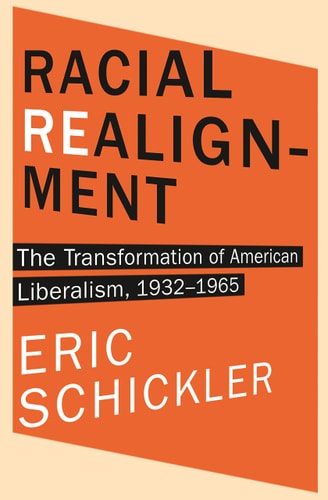
Racial Realignment: The Transformation of American Liberalism, 1932–1965
0
0
As an Amazon Associate and affiliate partner, Menrva Books earns from qualifying purchases. Learn more
Author Description
Few transformations in American politics have been as important as the integration of African Americans into the Democratic Party and the Republican embrace of racial policy conservatism. The story of this partisan realignment on race is often told as one in which political elites—such as Lyndon Johnson and Barry Goldwater—set in motion a dramatic and sudden reshuffling of party positioning on racial issues during the 1960s. Racial Realignment instead argues that top party leaders were actually among the last to move, and that their choices were dictated by changes that had already occurred beneath them. Drawing upon rich data sources and original historical research, Eric Schickler shows that the two parties' transformation on civil rights took place gradually over decades. Schickler reveals that Democratic partisanship, economic liberalism, and support for civil rights had crystallized in public opinion, state parties, and Congress by the mid-1940s. This trend was propelled forward by the incorporation of African Americans and the pro-civil-rights Congress of Industrial Organizations into the Democratic coalition. Meanwhile, Republican partisanship became aligned with economic and racial conservatism. Scrambling to maintain existing power bases, national party elites refused to acknowledge these changes for as long as they could, but the civil rights movement finally forced them to choose where their respective parties would stand. Presenting original ideas about political change, Racial Realignment sheds new light on twentieth and twenty-first century racial politics.
Menrva's Summary
THE THESIS
The integration of African Americans into the Democratic Party and the Republican embrace of racial policy conservatism fundamentally reshaped American politics. This book argues that the partisan realignment on race, often attributed to the dramatic shifts of the 1960s, was in fact a gradual process driven by changes in public opinion and grassroots movements, with political elites lagging behind. Eric Schickler demonstrates how Democratic partisanship, economic liberalism, and support for civil rights coalesced by the mid-1940s, bolstered by the inclusion of African Americans and the CIO into the Democratic coalition, while the Republican party increasingly aligned with economic and racial conservatism. The book details how national party leaders resisted acknowledging these shifts until the civil rights movement compelled them to define their parties' stances.
THE SCOPE MAP
- Analysis of the gradual transformation of American political parties on racial issues from 1932 to 1965.
- Examination of how public opinion, state parties, and congressional voting patterns preceded elite-level decisions.
- The role of African American voters and the Congress of Industrial Organizations (CIO) in reshaping the Democratic coalition.
- The crystallization of economic and racial conservatism within the Republican Party.
- The impact of the civil rights movement in forcing party elites to confront and solidify their positions on race.
- Original historical research and rich data sources to support the argument.
THE AUTHORITY PERSPECTIVE
This book presents a compelling reinterpretation of a pivotal period in American political history, challenging conventional narratives that focus on elite-driven change. By meticulously detailing the gradual, bottom-up transformation of party platforms on race, Schickler offers a nuanced understanding of how public opinion and social movements ultimately dictated political outcomes. The work is recognized for its original ideas and its contribution to the study of twentieth and twenty-first century racial politics.
Page Count:
384
Publication Date:
2016-04-26
Publisher:
Princeton University Press
ISBN-10:
0691153884
ISBN-13:
9780691153889
Non-Fiction
History
Civil Rights
American History
Community Tags
Similar Books














