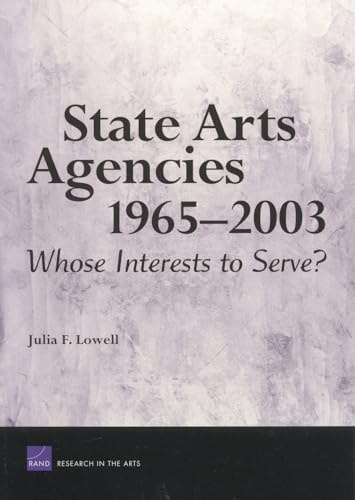
State Arts Agencies, 1965-2003: Whose Interests to Serve?
0
0
As an Amazon Associate and affiliate partner, Menrva Books earns from qualifying purchases. Learn more
Author Description
The early 2000s have been difficult for many, if not most, state and jurisdictional arts agencies (referred to as state arts agencies, or SAAs). In fiscal year (FY) 2003, a record 43 of 56 SAAs reported year-over-year declines in the general fund appropriations budgeted to them by their state legislatures. In FY 2004, 34 agencies reported further budget reductions, with nine of them in California, Colorado, Guam, Florida, Michigan, Minnesota, Missouri, Oregon, and Virginia reporting cuts of more than 30 percent. Six SAAs those in Alaska, Arizona, California, Colorado, Missouri, and New Jersey faced serious threats of elimination. The immediate cause of these early-2000s budget problems is a fiscal crisis that, in many states, is unprecedented. However, as this report argues, these cuts to state arts budgets are more than just a one-time response to fiscal crisis by state officials. Findings from in-depth interviews with staff from 13 SAAs and a review of the literature on SAAs and the National Endowment for the Arts (NEA) suggest a growing mismatch between the grantmaking role and structure of many SAAs and the cultural and political realities they face. And even though many SAAs are trying to reach beyond their traditional grantee constituencies, the perception if not the fact that SAAs primarily serve artists and arts organizations rather than the broader public is yet to be overcome. A short review of the history of SAAs helps to explain why this is so.
Menrva's Summary
THE THESIS
The book investigates the financial struggles and evolving role of state arts agencies in the early 2000s. This report examines the significant budget cuts faced by state arts agencies (SAAs) in the early 2000s, arguing that these reductions stem from more than just fiscal crises. Through interviews with SAA staff and a review of relevant literature, the report identifies a growing disconnect between the structure and grantmaking practices of many SAAs and the contemporary cultural and political landscapes. It also addresses the persistent perception that SAAs primarily benefit artists and arts organizations, rather than the general public, a perception rooted in their historical development.
THE SCOPE MAP
- Analysis of year-over-year declines in general fund appropriations for SAAs.
- Identification of specific states experiencing severe budget reductions and threats of elimination for their SAAs.
- Exploration of the immediate cause: a fiscal crisis in many states.
- Argument that budget cuts reflect a deeper mismatch between SAA roles and current realities.
- Findings from in-depth interviews with staff from 13 SAAs.
- Review of literature on SAAs and the National Endowment for the Arts (NEA).
- Discussion of the historical development of SAAs and its impact on current perceptions.
- Examination of the challenge SAAs face in overcoming the perception of serving narrow constituencies.
THE AUTHORITY PERSPECTIVE
This report is likely to be of interest to policymakers, arts administrators, and scholars of cultural policy and public administration. It provides a data-driven analysis of the challenges facing state arts agencies, grounded in both empirical research and historical context. The findings suggest a need for SAAs to adapt their structures and outreach to better align with public expectations and political realities in order to secure continued funding and relevance.
Page Count:
40
Publication Date:
2004-01-01
Publisher:
RAND
ISBN-10:
0833035622
ISBN-13:
9780833035622
History
Politics
Non-Fiction
Government
Public Policy
Arts Administration
Community Tags
Similar Books