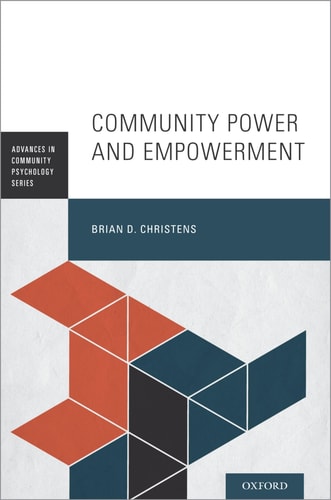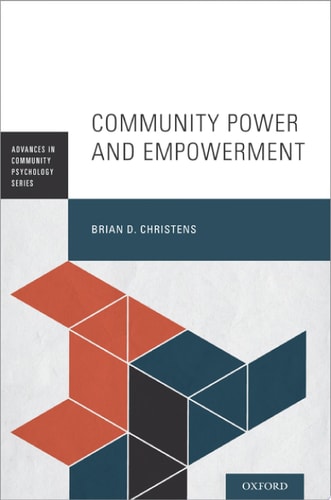
Community Power and Empowerment
0
0
As an Amazon Associate and affiliate partner, Menrva Books earns from qualifying purchases. Learn more
Author Description
Many People Want To Help Bring About Changes In Their Neighborhoods, Workplaces, And Communities. Leaders And Scholars Of Change Efforts Are Likewise Eager For Insights Into What Makes Some Organizations And Coalitions Capable Of Building And Exercising Power. Why Are Some Groups Successful In Making Changes In Policies And Systems And In Sustaining Their Momentum Over Time, While Others Struggle Or Never Really Get Off The Ground? With Community Power And Empowerment, Brian D. Christens Brings The Most Comprehensive Analysis Of Empowerment Theory Yet Conducted To Bear On These Questions, Taking Aim At Many Of The Longstanding Weaknesses And Ambiguities Of Empowerment Theory, Research, And Practice. For Example, One Major Hindrance Is That Most Notions Of Empowerment Have Not Been Coherently Connected With Community Power. In Addition, Research Has Emphasized Psychological Aspects Of Empowerment Over Organizational Processes, And Has Neglected Community Empowerment Processes To An Even Greater Extent. By Linking Empowerment And Community Power, Christens Constructs A Holistic Framework For Assessing And Comparing Community-driven Change Efforts. This Book Offers New Guidance For Inquiries Into Outcomes And Impacts Of Empowerment Processes On Health And Well-being, Providing A Resource For Researchers, Organizational Leaders, Practitioners, And Anyone Interested In Collective Action For Change.
Menrva's Summary
THE THESIS
This book investigates the mechanisms that allow community organizations and coalitions to effectively build, exercise, and sustain power to influence policy and systemic change. Brian D. Christens, a scholar in community psychology and social change, synthesizes existing research to address the historical disconnect between empowerment theory and the practical application of community power. He argues that by integrating these two fields, practitioners and researchers can better understand why certain collective actions succeed while others fail to gain momentum.
THE SCOPE MAP
What You Will Find
- A comprehensive theoretical framework linking individual empowerment to community-level power dynamics.
- Methodologies for assessing the impact of organizational processes on health and well-being.
- Analysis of the structural and psychological factors that influence the longevity of change efforts.
Scope Limits
- The text focuses primarily on organizational and community-level processes rather than individual-level clinical psychology.
- It does not provide a step-by-step manual for grassroots organizing but rather a theoretical and analytical foundation for such work.
THE AUTHORITY PERSPECTIVE
Experts identify this work as a significant contribution to the literature on community psychology and social change. Readers frequently note the academic density of the prose, which serves as a rigorous resource for researchers and practitioners seeking to refine their understanding of collective power.
Page Count:
352
Publication Date:
2019-01-01
Publisher:
Oxford University Press
ISBN-10:
0190605596
ISBN-13:
9780190605599
Sociology
Organizational Theory
Social change
Community Development
Public Policy