How Change Happens
0
0
As an Amazon Associate and affiliate partner, Menrva Books earns from qualifying purchases. Learn more
Author Description
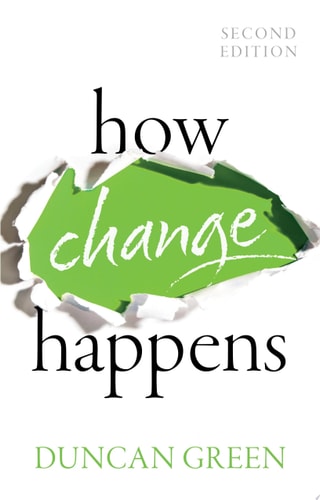
Society Is Full Of Would-be 'change Agents' - Campaigners, Government Officials, Enlightened Business People, Engaged Intellectuals - Set On Improving Public Services, Reforming Laws And Regulations, Guaranteeing Human Rights, Achieving A Fairer Deal For Those On The Sharp End, And Greater Recognition For Any Number Of Issues. Striking Then, That Not Many Universities Have A Department Of Change Studies, To Which Social Activists Can Turn For Advice And Inspiration. Instead, Scholarly Discussions Of Change Are Fragmented With Few Conversations Crossing Disciplinary Boundaries, Rarely Making It Onto The Radars Of Those Actively Seeking Change. This Book Aims To Bridge The Gap Between Academia And Practice. Drawing On First-hand Examples And Numerous New Case Studies And Interviews With Grassroots Activists And Organizations Around The World, As Well As Oxfam's Unrivalled Global Experience And The Author's Forty Years As Activist, Teacher And Scholar, This Second Edition Of How Change Happens Explores The 'actors And Factors' That Drive Change. Its Starting Point Is The Importance Of Understanding Complex Systems And The Nature Of Power, And Applying This To The Institutions That Activists Seek To Influence - Social Norms, States, Politics, The International System And Transnational Corporations. It Examines The Role Of Civil Society Organizations, Digital Activism, Leadership And Advocacy In Bringing About Change, And How We - Governments, Organizations, Businesses, Leaders, Campaigners And Ordinary Citizens - Can Make A Difference-- Provided By Publisher.
Menrva's Summary
THE THESIS
This book investigates the mechanisms of social and political change by bridging the gap between academic theory and the practical realities faced by activists. Dr. Duncan Green, leveraging his extensive experience as an activist and scholar alongside Oxfam's global research, presents a framework for understanding how complex systems and power dynamics influence institutional reform. The text argues that effective change requires a nuanced grasp of social norms, state structures, and transnational influence rather than reliance on simplistic advocacy models.
THE SCOPE MAP
What You Will Find
- Analysis of complex systems and power dynamics in social change.
- Case studies of grassroots activism and organizational strategies globally.
- Examination of digital activism, leadership, and advocacy within international systems.
- Frameworks for influencing social norms, states, and corporations.
Scope Limits
- The text does not provide a universal manual for success in every specific political context.
- It does not focus on the internal management of non-profit organizations, but rather their external impact.
THE AUTHORITY PERSPECTIVE
Experts and practitioners frequently cite this work as a foundational text for understanding the intersection of development theory and real-world advocacy. Readers often note the accessibility of the prose despite the academic depth of the subject matter.
Page Count:
286
Publication Date:
2016-01-01
Publisher:
OUP Oxford
ISBN-10:
0191088366
ISBN-13:
9780191088360
Leadership
International Development
Sociology
Social change
Change
Public Policy