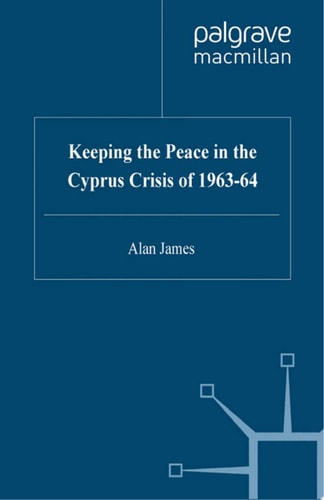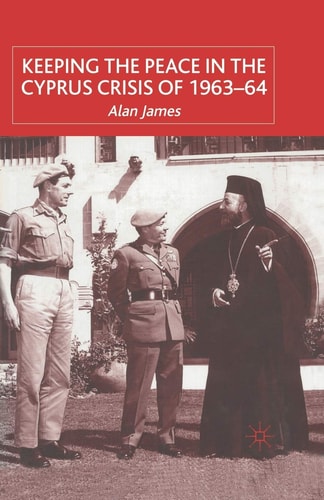
Keeping the Peace in the Cyprus Crisis of 1963–64
0
0
As an Amazon Associate and affiliate partner, Menrva Books earns from qualifying purchases. Learn more
Author Description
During the Cold War the small state of Cyprus was of great strategic importance to the West. Britain, the United States, and Nato all had valuable installations there; and any armed conflict between Greek and Turkish Cypriots could easily suck two nearby Nato members - Greece and Turkey - into war. When therefore, intercommunal fighting broke out in Cyprus in December 1963, the West was deeply embarrassed. This book examines the consequential efforts of, first Britain, and then the UN, to keep the peace.
Menrva's Summary
THE THESIS
This book examines the critical role of external powers in mediating the Cyprus crisis of 1963-64, a period of intense intercommunal conflict with significant Cold War implications. Authored by A. James, the work analyzes the strategic importance of Cyprus to Western interests, including Britain, the United States, and NATO, due to vital installations and the potential for escalation involving Greece and Turkey. The book details the consequential peacekeeping efforts undertaken first by Britain and subsequently by the United Nations in response to the outbreak of fighting in December 1963, highlighting the geopolitical embarrassment and the complex diplomatic maneuvers required.
THE SCOPE MAP
- The strategic importance of Cyprus during the Cold War for Western powers.
- The outbreak and nature of intercommunal fighting between Greek and Turkish Cypriots in December 1963.
- Britain's initial efforts to maintain peace on the island.
- The United Nations' subsequent involvement and peacekeeping operations.
- The geopolitical context and the risk of wider conflict involving Greece and Turkey.
- The diplomatic challenges and embarrassments faced by the West.
THE AUTHORITY PERSPECTIVE
The book is likely to be regarded as a detailed historical account focusing on the diplomatic and military interventions during a volatile period. Its analysis of the strategic stakes for Western powers and the UN's role suggests a work of interest to students of international relations and Cold War history. The focus on peacekeeping efforts indicates a pragmatic approach to understanding conflict resolution in a complex geopolitical landscape.
Page Count:
241
Publication Date:
2001-11-28
Publisher:
Palgrave Macmillan UK
ISBN-10:
1349411418
ISBN-13:
9781349411412
Politics
History
Non-Fiction
International relations