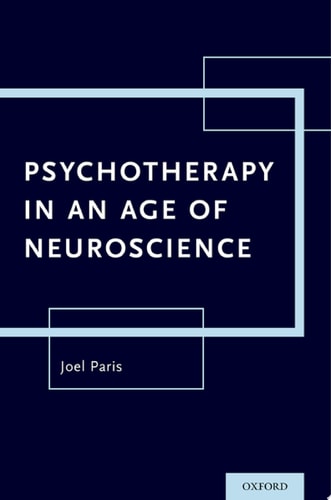
Psychotherapy in an Age of Neuroscience
0
0
As an Amazon Associate and affiliate partner, Menrva Books earns from qualifying purchases. Learn more
Author Description
Psychotherapy In an Age of Neuroscience is a critique of the neuroscience model that dominates contemporary psychiatric practice. It shows that while the neurosciences have made great advances, this line of research has thus far had little application to the care of patients. It criticizes the over-use of psychopharmacological interventions for common mental disorders such as depression, anxiety, and substance use. It examines why many, if not most, psychiatrists are seeing patients for 15-minute "med checks" oriented to current symptoms and DSM criteria, and are not taking the time to become familiar with the lives of their patients.The book shows that effective psychotherapeutic interventions are being under-utilized. It proposes that psychiatric practice include the use of psychotherapies that are brief and evidence-based. While most therapy will need to be carried out by psychologists and other mental health professionals, psychiatrists should take on the most complex and difficult cases that require both medication and therapy. By integrating biological and psychosocial interventions, psychiatrists can regain their reputation for breadth of vision and humanism.
Menrva's Summary
THE THESIS
This book investigates the disconnect between the rapid advancements in neuroscience and the practical application of these findings in clinical psychiatric care. Author Joel Paris, a medical doctor, argues that the current over-reliance on psychopharmacology and symptom-focused medication management has marginalized the role of psychotherapy. He proposes a model where psychiatrists integrate biological treatments with evidence-based, brief psychotherapeutic interventions to address the complex needs of patients more holistically.
THE SCOPE MAP
What You Will Find
- A critique of the current 15-minute medication management model in psychiatry.
- An analysis of the limitations of the DSM criteria in capturing the patient's life experience.
- Evidence-based arguments for the efficacy of brief psychotherapeutic interventions.
- A proposed framework for integrating biological and psychosocial care.
Scope Limits
- The text does not provide a comprehensive manual for specific therapeutic techniques.
- It does not dismiss the value of neuroscience research but rather questions its current clinical implementation.
THE AUTHORITY PERSPECTIVE
Experts and practitioners often cite this work as a necessary challenge to the biological reductionism prevalent in modern psychiatry. Readers frequently note the clarity of the author's argument regarding the necessity of restoring the humanistic element to clinical practice.
Page Count:
216
Publication Date:
2017-06-14
Publisher:
Oxford University Press
ISBN-10:
0190601019
ISBN-13:
9780190601010
Psychology
Neuroscience
Medical Ethics
Psychotherapy
Psychiatry
Mental Health
Neurosciences
Community Tags
Similar Books