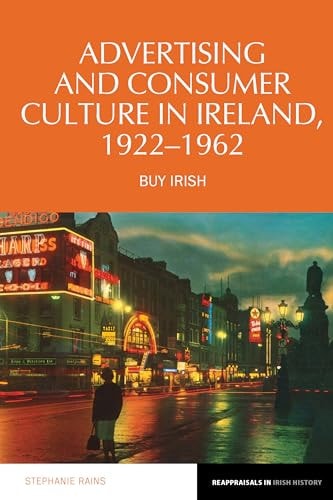
Advertising and Consumer Culture in Ireland, 1922-1962: Buy Irish
0
0
As an Amazon Associate and affiliate partner, Menrva Books earns from qualifying purchases. Learn more
Author Description
This book explores advertising and consumer culture as key aspects of everyday life and national culture in twentieth-century Ireland. It makes a particular argument that the presence of anti-materialist rhetoric in some parts of Irish public life after Independence has obscured the existence of a lively consumer culture throughout the period, as evident in the many advertisements which supported Irish newspapers and magazines, the jingles broadcast on Irish radio, and the neon advertising signs and billboards on Irish streets. The book focuses on the development of the advertising industry itself, and the sophisticated ways in which it worked to associate consumption with national pride. It also considers the advertising of Irish homes and home appliances as an important focus of consumption, and the targeting of Irish women as the principal consumers in those homes, as well as publicity stunts and advertising in public space, and the form and style of commercial broadcasting and sponsored programming from the earliest days of Irish radio. It finishes with an examination of the opposite extremes of consumer abundance displayed in the annual Christmas advertising, as opposed to the consumer culture response to shortages during World War Two.
Menrva's Summary
THE THESIS
This book investigates the complex relationship between advertising, consumer culture, and national identity in Ireland from 1922 to 1962. It argues that despite prevailing anti-materialist rhetoric post-Independence, a vibrant consumer culture flourished, evidenced by extensive print and radio advertising, and prominent street signage. The work examines the evolution of the advertising industry, its strategic association of consumption with national pride, and its focus on the domestic sphere, particularly targeting women as primary consumers.
THE SCOPE MAP
- The development and practices of the advertising industry in Ireland.
- The association of consumption with national pride and identity.
- Advertising of homes, home appliances, and the targeting of women as consumers.
- Publicity stunts and advertising in public spaces.
- The form and style of commercial broadcasting and sponsored programming on Irish radio.
- Analysis of consumer culture during periods of abundance (Christmas advertising) and scarcity (World War Two).
THE AUTHORITY PERSPECTIVE
The book's detailed examination of advertising and consumer culture in twentieth-century Ireland offers a nuanced perspective on national identity and material life. By analyzing print, radio, and public displays, it reveals a more complex picture than anti-materialist rhetoric might suggest. The focus on how consumption was linked to national pride and the specific targeting of women as consumers provides significant insight into social and economic history. The contrasting analyses of Christmas advertising and wartime shortages further highlight the dynamic nature of consumer responses.
Page Count:
252
Publication Date:
2025-08-28
Publisher:
Liverpool University Press
ISBN-10:
1836245009
ISBN-13:
9781836245001
Non-Fiction
History
Advertising history
Irish History
Social History
Community Tags
Similar Books