The Spirit of Early Evangelicalism
0
0
As an Amazon Associate and affiliate partner, Menrva Books earns from qualifying purchases. Learn more
Author Description
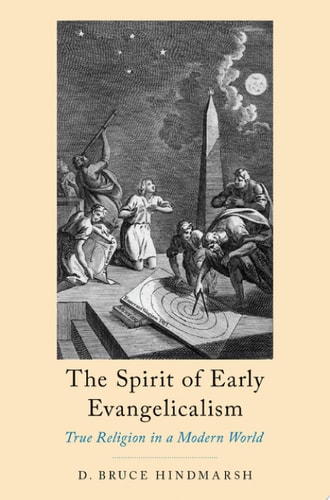
Evangelicalism Appeared As A New Pattern Of Christian Devotion At A Moment When The Foundations Of Anglo-american Society Were Shifting. The Spirit Of Early Evangelicalism Locates The Rise Of Evangelical Religion In Relation To Movements That We Now Routinely Acknowledge With Capital Letters: Modernity, The Scientific Revolution, And The Enlightenment. The Book Examines The Evangelical Awakening In Connection With The History Of Science, Law, Art, And Literature. The Eighteenth Century Saw A Profound Turn Toward Nature And The Authority Of Natural Knowledge In Each Of These Discourses. As A More Democratic Public Sphere Became Available For Debating Contemporary Concerns, Evangelicals Forcefully Pressed Their Agenda For True Religion, Believing It Was Still Possible To Experience The Life Of God In The Soul Of Man. The Results Were Dramatic And Disruptive. Bruce Hindmarsh Provides A Fresh Perspective, And Presents New Research, On The Thought Of Leading Figures Such As John And Charles Wesley, George Whitefield, And Jonathan Edwards. He Also Traces The Significance Of Evangelical Spirituality For Elites And Non-elites Across Multiple Genres. This Book Traces The Meaning Of Evangelical Devotion In A Rich Variety Of Contexts, From The Scribbled Marginalia Of Lay Methodists And The Poetry Of An African-american Laywoman To The Visual Culture Of Grand Manner Portraits And Satirical Prints. Viewing Devotion, Culture, And Ideas Together, It Is Possible To See The Advent Of Evangelicalism As A Significant New Episode In The History Of Christian Spirituality.
Menrva's Summary
THE THESIS
This book investigates how the rise of early Evangelicalism functioned as a distinct pattern of Christian devotion within the shifting cultural and intellectual landscape of the eighteenth-century Anglo-American world. D. Bruce Hindmarsh, a scholar of Christian history, utilizes a multidisciplinary approach to situate the Evangelical Awakening alongside the Enlightenment, the Scientific Revolution, and the emergence of a democratic public sphere. He argues that Evangelicals engaged with these modern shifts by asserting the possibility of experiencing the life of God in the soul of man, thereby creating a disruptive yet significant movement in Christian spirituality.
THE SCOPE MAP
What You Will Find
- Analysis of intellectual intersections between Evangelicalism and the history of science, law, art, and literature.
- Examination of key figures including John and Charles Wesley, George Whitefield, and Jonathan Edwards.
- Investigation of diverse primary sources, ranging from lay Methodist marginalia and African-American poetry to visual culture and satirical prints.
Scope Limits
- The study focuses primarily on the eighteenth-century Anglo-American context and does not provide a comprehensive global history of Evangelicalism.
- The work prioritizes the history of spirituality and cultural ideas over a strictly institutional or denominational history of the movement.
THE AUTHORITY PERSPECTIVE
Scholars and historians frequently commend this work for its rigorous integration of cultural history with theological analysis. Experts highlight the text as a sophisticated contribution to the study of early modern religion that successfully moves beyond traditional denominational narratives.
Page Count:
336
Publication Date:
2017-01-01
Publisher:
Oxford University Press
ISBN-10:
0190616709
ISBN-13:
9780190616700
History
Eighteenth Century
Evangelicalism
Theology
Christianity
Community Tags
Similar Books